Metal vs Wooden vs Plastic Sheds: Which Should You Buy?
An honest comparison of metal, wooden and plastic garden sheds. Security, lifespan, maintenance, looks and cost compared, so you can choose the right material for your garden.
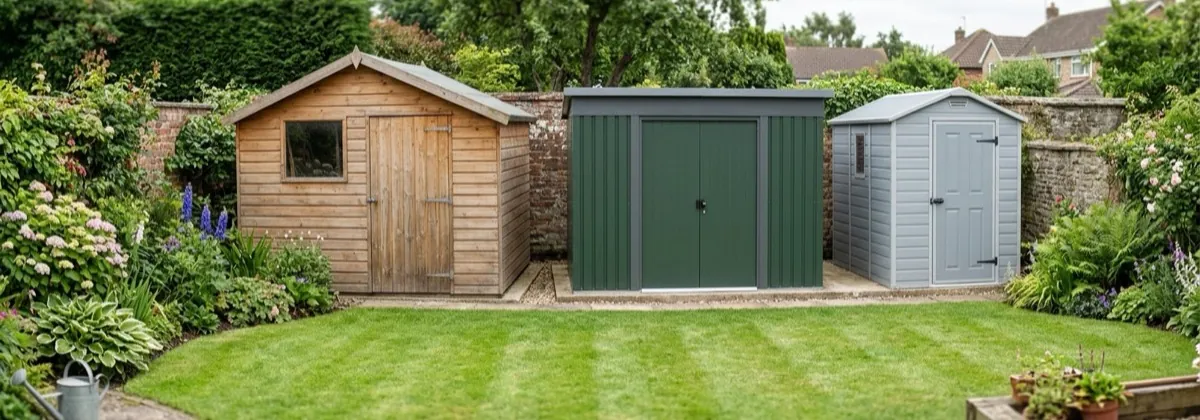
Timber, steel or resin? Every shed material has a genuine sweet spot, and picking the wrong one for your situation is an expensive mistake to live with for twenty years. This guide compares the three honestly: how long each lasts, what it demands of you, how secure it really is, and what it costs over its lifetime rather than just on day one.
Wood for looks, warmth and adaptability. Metal for security and the longest maintenance-free life. Plastic for zero upkeep in damp gardens. The detail below is about the trade-offs each of those wins costs you.
Quick Comparison
Here is how the three materials stack up on the things people actually ask about, based on typical mid-range products rather than the cheapest or most premium extremes.
| Wooden | Metal | Plastic | |
|---|---|---|---|
| Typical lifespan | 15–25+ yrs (treated) | 20–30 yrs | 10–20 yrs |
| Maintenance | Re-treat every 1–3 yrs | Almost none | None (a wash) |
| Security potential | Moderate | Highest | Lowest |
| Looks | Best, and paintable | Utilitarian | Improving, but plain |
| Customisation | Unlimited | Very limited | Very limited |
| Condensation risk | Low | High without vents | Moderate |
| Typical 8x6 price | £450–£1,500 | £300–£1,400 | £500–£1,200 |
Wooden Sheds: The Default for a Reason
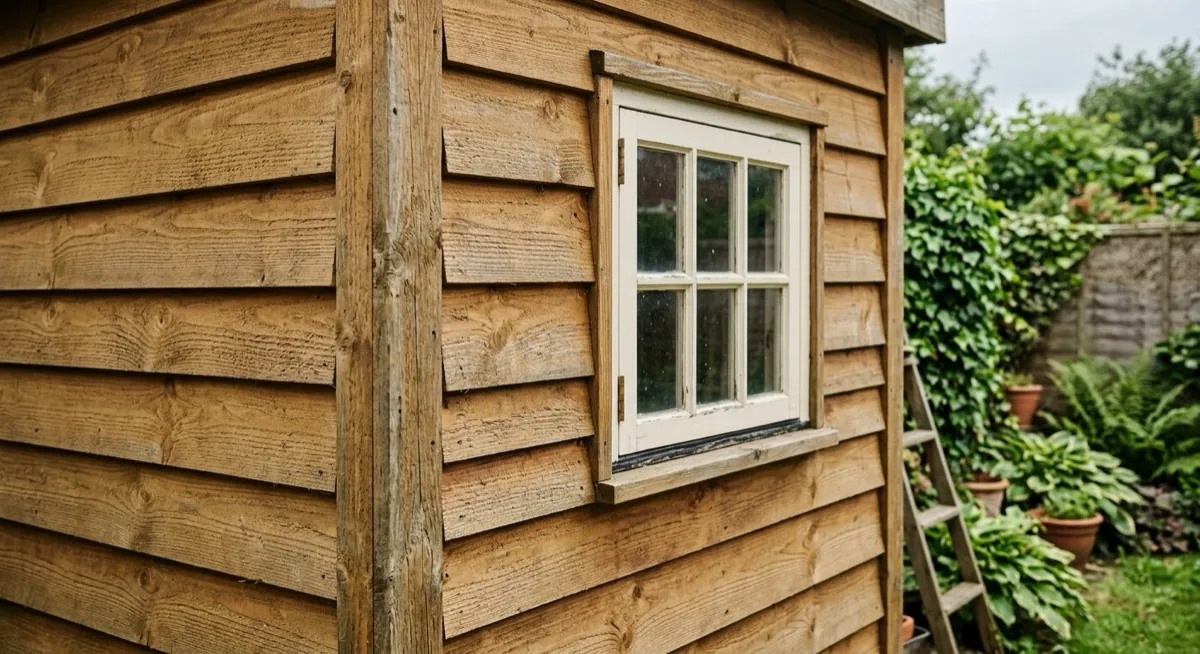
Timber remains the most popular shed material in the UK, and not out of habit. A wooden shed looks like it belongs in a garden, takes paint or stain in any colour you fancy, and is the only material you can genuinely modify. Want an extra window, a workbench bolted to the studs, shelves, insulation, or a partition? With timber you just do it.
Construction quality matters more with wood than with anything else. Overlap cladding is the budget option and perfectly serviceable for a tool store. Shiplap and tongue-and-groove boards interlock, shed water better and stiffen the whole building. Pressure-treated timber carries a 10 to 25 year anti-rot guarantee from most manufacturers; dip-treated timber needs re-treating from year one. Our visual shed types and terminology glossary defines the frame and specification language, while the cladding comparison goes deeper on the wall options.
The honest downsides
- Maintenance is not optional. An untreated or neglected timber shed in a damp corner can be visibly rotting within five years. Budget a weekend every couple of years for treatment.
- Wood moves. Doors can stick in wet winters, boards can split in hot summers. Quality framing minimises this but never eliminates it.
- Security is only moderate. Any battery drill will go through a timber wall, and hinges are a classic weak point. See our shed security guide.
Timber is also the only material you can build yourself to a custom footprint. Our free shed builder generates the full cutting and materials list for any size.
Metal Sheds: Longest Life, Least Charm
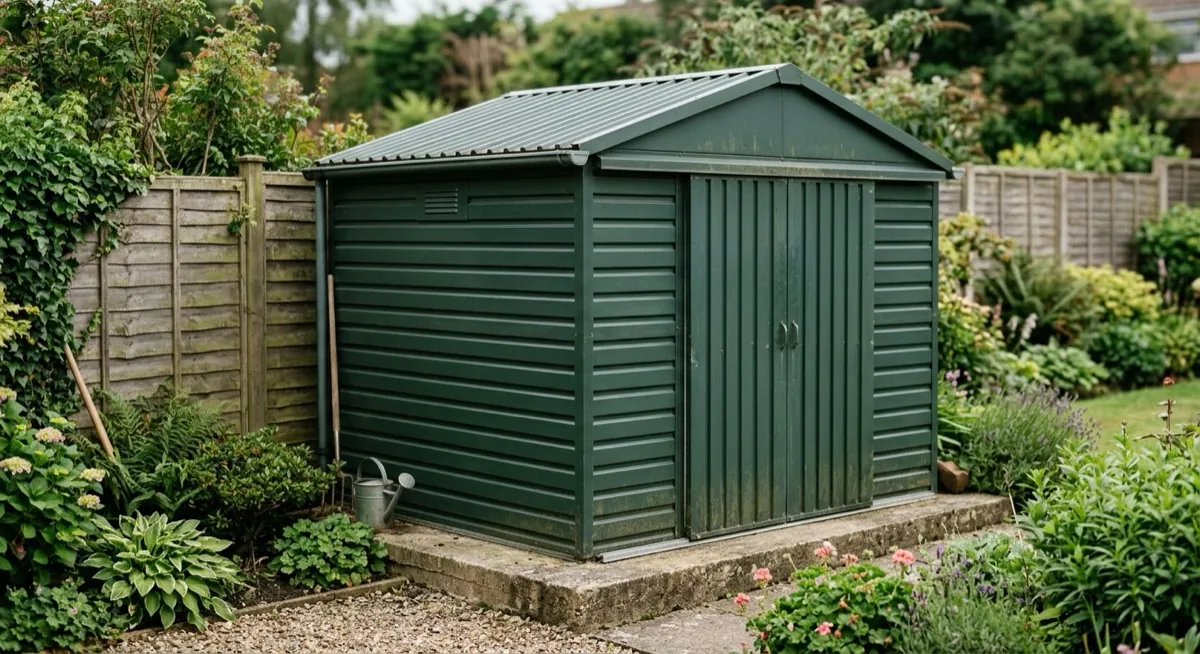
A modern metal shed is hot-dip galvanised steel, usually with a baked-on colour coating, and it simply does not rot, warp or burn. Panel guarantees of 10 to 25 years are standard, and the real-world lifespan is often longer. For a pure storage building you intend to ignore for two decades, steel is hard to argue with.
Quality varies enormously though. Budget metal sheds use thin panels that flex, dent and rattle, with fiddly bolt-together assembly running to several hundred fasteners. Premium brands use thicker gauge steel, proper door runners, and integrated floors, and the difference in rigidity is obvious the moment you touch them.
The honest downsides
- Condensation. A cold steel roof can collect condensation and drip. Keep factory vents clear and contents off the floor. Our condensation guide covers the causes; the ventilation guide explains what to check before adding vents to metal or plastic panels.
- No modification. You cannot easily add a window, a bench or a hook without compromising the panels.
- Looks. Even the good ones look like what they are: a steel box. Colour choices help, but nobody plants roses around a metal shed for the aesthetics.
- Anchoring is essential. An unanchored empty metal shed is a large sail. All of them must be bolted to a solid base.
Plastic Sheds: Zero Effort, Fixed Limits
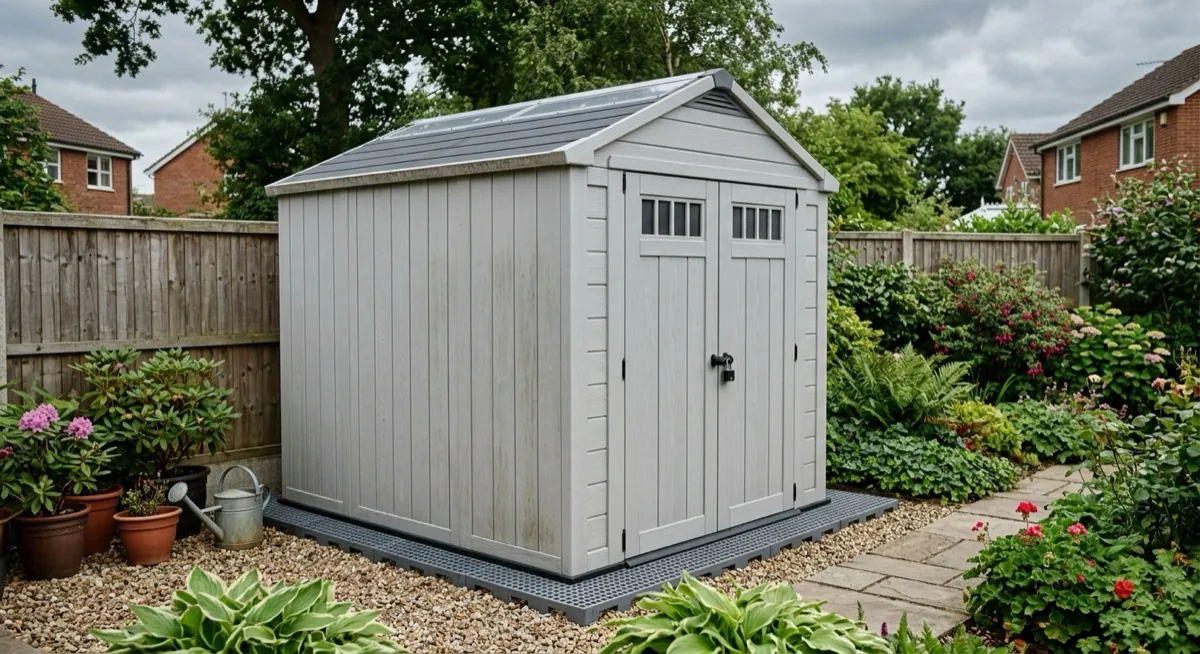
Modern plastic sheds are moulded resin (usually polypropylene or vinyl) over a steel or resin frame, and they have improved hugely from the flimsy boxes of fifteen years ago. The appeal is total freedom from maintenance: they cannot rot or rust, never need painting, and clean up with a hose. In a damp, shaded garden that kills timber, plastic quietly gets on with the job.
Assembly is the easiest of the three, panels click and screw together in a few hours, and many include moulded floors, skylights and integrated shelving points. Mid-range resin sheds feel solid; the very cheapest still feel like wheelie bins.
The honest downsides
- Security is the weakest. Resin panels can be cut or levered far more easily than steel, and lock points are usually just moulded hasps. Do not keep anything valuable in one.
- UV fading. Ten summers of sun will fade most resin colours noticeably, and the material gets slightly brittle with age.
- Fixed sizes and layouts. What the mould makes is what you get, and you cannot screw anything heavy to the walls without special fixings.
- Wind. Light panels mean anchoring to a solid base is compulsory, not optional.
Security: The Deciding Factor for Many
If your shed will hold a decent bike, power tools or a mower worth stealing, security should probably outrank every other factor, and the gap between materials is real. Timber can be reinforced usefully with better locks, hinges and mesh, but a determined thief with hand tools gets through any wooden wall. Budget metal and plastic are no better.
The step change is a purpose-built steel security shed: thick galvanised panels, concealed multi-point locking, pick-resistant locks and no exposed fixings. Brands in this class are certified to insurance-recognised standards (look for LPCB ratings), and some insurers will only cover high-value bikes stored in one. They cost more per square foot than any garden shed, but far less than one stolen e-bike.
Many home policies cap outbuilding cover or require specific lock standards. If you store anything valuable in a shed, read the outbuildings section of your policy before choosing the shed, not after a theft.
Which Should You Choose?
Match the material to the job and the garden, not to the price tag alone:
- Choose wood if the shed is visible from the house, you want to customise or work inside it, you might insulate it later, or you simply care how it looks. Accept the treatment routine as the price.
- Choose metal if the priority is secure, long-life storage and you will not need to modify it. Spend up to a quality brand; budget metal sheds are the most disappointing products in the whole category.
- Choose plastic if the garden is damp or shaded, you want zero maintenance, and the contents are low value. Anchor it properly and it will quietly last.
Still weighing cost? Our Build vs Buy comparison shows the live price gap between building a timber shed yourself and buying each type ready-made for your size.
Frequently Asked Questions
Which shed material lasts the longest?
Are metal sheds more secure than wooden sheds?
Do plastic sheds blow over in wind?
Which shed is best for damp gardens?
Can I insulate a metal or plastic shed?
Summary
There is no universally best shed material, only a best fit for your garden and contents:
- Wooden: the best-looking and only truly adaptable option, in exchange for regular treatment
- Metal: the security and longevity champion, at the cost of charm and flexibility
- Plastic: the zero-maintenance answer for damp gardens and low-value storage
Whichever you pick, the base matters as much as the building: every one of these materials fails early on bad foundations. Start with our foundation guide.
Prefer to Build Your Own?
Design a timber shed to your exact size with our free builder and get a complete materials list, cutting plan and cost estimate.
Open the Shed Builder