Shed Security: How to Protect Your Tools and Kit
Practical layered security for a UK garden shed. Covers doors, hinges, locks, windows, ground anchors, lighting, alarms and insurance to help stop shed theft.
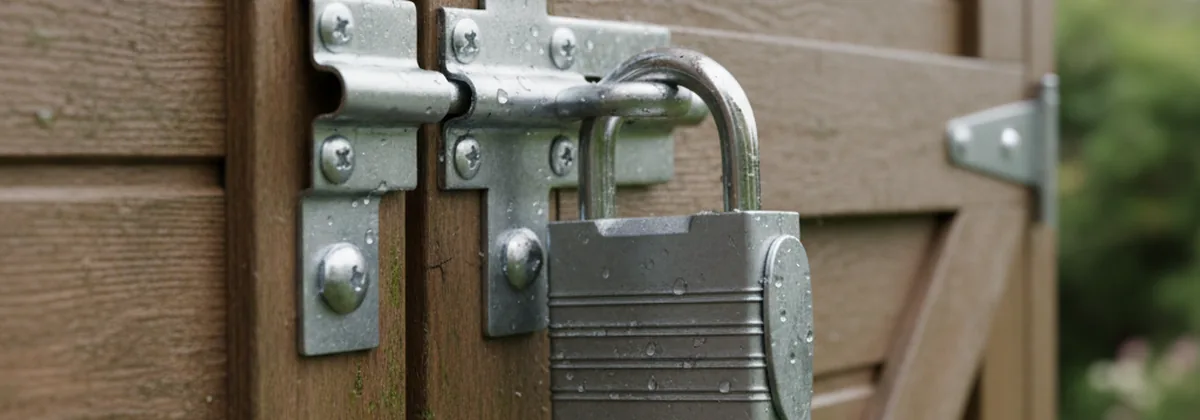
A shed full of tools, mowers and bikes is a soft target. Most sheds come with a flimsy hasp held on by woodscrews and a pound-shop padlock, which is no obstacle at all to anyone with a screwdriver or a pair of bolt croppers. The good news is that proper shed security is cheap and well within the reach of any competent DIYer. This guide walks through the practical, layered measures that actually stop shed theft, from the door and hinges right through to anchoring, alarms and insurance.
For the hours after sunset, see our guide to shed lighting, night-time access and security.
Try the garden storage planner →
Arrange your bikes, tools and shelves, then check overlaps and door access. Free, with no sign-up.
You cannot make a timber shed burglar-proof. What you can do is make it slow, noisy and not worth the bother, so the thief moves on to an easier target. Every layer you add buys time and raises the risk for them, and that is what does the job.
Think in Layers, Not One Magic Lock
The mistake people make is spending forty quid on one fancy padlock and leaving everything else as the manufacturer supplied it. A thief does not need to beat the lock if they can unscrew the hinges, lever the frame, or smash a window and reach in. Good shed security works in layers: harden the door, the hinges and the frame so the whole thing resists attack, then anchor the valuable kit inside so even a breach does not hand them an easy carry-out, and finally add lighting and an alarm so any attempt is lit up and loud.
Work through the measures below in order of payback. The door and hinges come first because that is where almost every break-in happens. Anchoring comes next because it protects the items worth the most. The rest are inexpensive deterrents that tip the odds in your favour.
The Door: Your Weak Point
The door is where nearly every shed break-in starts, so it gets the most attention. The factory hasp is usually thin pressed steel held on with short woodscrews, and woodscrews pull straight out of softwood with a wrecking bar. Replace it properly.
- Fit a heavy hasp and staple - Buy a thick, hardened hasp and staple that covers its own fixings when closed, so the screw or bolt heads cannot be reached while it is locked.
- Bolt it through, do not screw it - Fix the hasp with coach bolts that pass right through the door, heads on the outside, with large penny washers or a steel backing plate on the inside. That way the fixing cannot be unscrewed or torn out of the timber.
- Use a closed-shackle padlock - Fit a closed-shackle padlock where the body shrouds the shackle, leaving almost nothing for bolt croppers to grip. A CEN-rated or Sold Secure padlock is money well spent.
- Fit two locking points - On a taller door, a second hasp and padlock near the top or bottom spreads the load and resists levering far better than a single central lock.
A hasp held on with woodscrews is worse than useless because it gives a false sense of security. The whole point of bolting through with washers or a backing plate is that the fixing is captive: there is nothing to undo and nothing to pull out.
Protecting the Hinges
There is no point fitting a brilliant lock if the door simply lifts off its hinges. Many shed hinges are external, screwed on with the same soft woodscrews, and a thief can either undo them or knock the pins out. Two simple fixes close that gap.
- Fit hinge bolts (dog bolts) - These are fixed pegs on the hinge edge of the door that locate into holes in the frame. When the door is shut it is held into the frame on the hinge side, so even with the pins knocked out the door stays put.
- Bolt or clutch-screw the hinges - Refix the hinges with coach bolts through the door, or with clutch-head security screws that drive in but cannot be undone with an ordinary screwdriver. Now the hinges cannot simply be removed.
- Check the screws supplied - The stubby screws that come with most sheds barely bite. Bin them and use proper fixings on every hinge and bracket.
The Door Frame and a London Bar
Even a well-locked door is no good if the frame it shuts against is weak. On a lightweight shed the frame can be levered or kicked away from the lock. Strengthen it.
Fit a London bar (a steel strip that reinforces the frame and the staple side of the lock), or at the least screw and bolt a stout timber batten down the closing edge of the frame so there is solid material for the hasp and bolts to pull against. A reinforced frame turns a one-kick job into a long, loud, splintering fight that most thieves will not take on.
Windows: Block the View and the Way In
Windows do two unhelpful things: they let a thief see your kit, and they offer a way in. Deal with both.
- Frost or cover the glass - Apply frosted film, fit an opaque panel, or hang a simple net or blind so nobody can see what is inside. If they cannot see a mower or a chainsaw, they have far less reason to try.
- Bars or grilles - Fit internal steel bars or a mesh grille across the opening, bolted to the frame from inside, so the window cannot be used as an entry point even if the glass goes.
- Swap the glass - Replace fragile glass with opaque polycarbonate, which is tough to smash and obscures the view at the same time.
If you are upgrading the openings altogether, our guide on installing shed windows and doors covers fitting more secure units from the start.
Ground Anchors and Chains
This is the measure that protects the items worth the most, and it is the one most people skip. A ground anchor is a heavy steel eye or plate bolted into a solid base. Run a hardened chain through your mower, bikes and power tool cases, and lock it to the anchor with a good closed-shackle padlock. Now, even if a thief gets through the door, the valuable kit will not move.
- Anchor into concrete - Bolt the ground anchor into a concrete base or slab with the security fixings supplied, not into the timber floor. If you do not have a solid base, our guide on how to build a shed foundation explains how to lay one.
- Use a proper chain - A hardened, square-link motorcycle-grade chain resists bolt croppers far better than a cheap chain from the DIY shed. Match it to a Sold Secure padlock.
- Keep the chain off the ground - A chain lying on the floor can be smashed with a hammer against the concrete. Keep it taut and raised so there is nothing solid behind it to strike against.
If you store bikes in particular, a dedicated bike shed with anchors built in from the start is well worth considering.
Mark and Record Your Kit
Marked tools are harder to sell on and easier to get back, and the marking itself puts thieves off. Take an hour to do this once.
- Mark everything - Use a forensic marking kit, an engraver or paint pen to put your postcode and house number on tools, mowers and bikes. Add the visible warning labels that come with marking kits.
- Photograph and log serial numbers - Photograph each item and write down the make, model and serial number. Keep the list somewhere safe, not in the shed.
- Register valuables - List bikes and pricey power tools on a recognised property register so they can be traced if recovered.
Lighting and Alarms
Thieves want darkness and quiet. Take both away and you remove most of their advantage.
PIR Security Lighting
Fit a PIR (motion-sensing) security light covering the approach to the shed. A sudden flood of light when someone steps into the garden at night is a strong deterrent, and it lets you and the neighbours see what is going on. Aim it so it does not glare into bedrooms or next door.
A Shed Alarm
A cheap battery-powered shed alarm or PIR alarm is one of the best-value upgrades you can fit. Many are self-contained, stick or screw inside the door, and sound a loud siren the instant the door opens or movement is detected. A thief expecting a quiet job will not hang around once a siren goes off. Test the batteries every few months so it is ready when it matters.
Other Cheap Deterrents
- Gravel paths - A band of gravel around the shed is impossible to cross quietly. The crunch of footsteps is a simple, cheap early warning.
- Defensive planting - Prickly shrubs such as berberis or pyracantha under windows and along boundaries make an unpleasant approach and a worse exit.
- Do not advertise - Keep the door shut while you work, do not leave tools out on the lawn, and break down and bin the boxes from new kit rather than leaving a TV-sized mower box on show by the bins.
- Lock it every time - The best lock in the world does nothing hanging open. Get into the habit of locking up even for a quick trip indoors.
Insurance: Check Before, Not After
Even with everything above in place, things can still go wrong, so make sure you are covered. Home insurance treats sheds and outbuildings differently from the house, and the cover is often limited.
- Check the outbuilding limit - Many policies cap shed and outbuilding contents at a low figure. If your tools and bikes are worth more, you may be underinsured.
- Read the security conditions - Insurers commonly require the shed to be locked with an approved padlock, and some want an alarm fitted, before they will pay out. Meet the conditions or a claim can be refused.
- Declare valuable items - Note any single-item limit and tell your insurer about pricey bikes or trade tools so they are properly covered.
Quick Wins Checklist
If you do nothing else, work through these in an afternoon and you will have shut out the casual thief:
- Replace the factory hasp with a heavy one, bolted through with washers or a backing plate
- Fit a closed-shackle, Sold Secure padlock
- Add hinge bolts and refix the hinges with bolts or clutch-head screws
- Reinforce the frame with a London bar or a stout batten
- Frost or cover the windows and add internal bars where needed
- Bolt a ground anchor into the base and chain up the mower and bikes
- Mark your tools and log the serial numbers
- Fit a PIR light and a battery shed alarm
- Check your insurance limits and security conditions
Common Mistakes to Avoid
A thin open-shackle padlock is cut with bolt croppers in a couple of seconds. Spend on a closed-shackle, Sold Secure lock and it will do its job.
Woodscrews into softwood pull straight out under a wrecking bar. Bolt hasps and hinges right through with washers or a backing plate so there is nothing to tear out.
A clear window onto a shiny mower is an advert. Frost the glass, keep kit out of sight, and do not leave boxes from new gear by the bins.
A top lock on a door that lifts off its hinges or sits in a flimsy frame protects nothing. Harden the whole door, not just the locking point.
Summary
Securing a shed is about layers that make the job slow, noisy and not worth it:
- Door - heavy hasp and staple bolted through, with a closed-shackle Sold Secure padlock
- Hinges - hinge bolts plus coach bolts or clutch-head screws so they cannot be undone
- Frame - a London bar or stout batten so the door cannot be levered or kicked in
- Windows - frosted or covered, with bars or polycarbonate to block entry
- Anchoring - a ground anchor in concrete and a hardened chain for mowers, bikes and tools
- Lighting and alarm - a PIR light and a cheap shed alarm to light it up and make a racket
Do those and check your insurance, and your shed becomes the one the thief walks past.
Planning a New, Secure Shed?
Use our free shed builder tool to design a shed with solid doors and a proper base, and get a complete materials list to match.
Start Building Now