How to Sell Your Shed: The Complete Second-Hand Seller's Guide
Upgrading or downsizing but your current shed is too good to skip? How to price it, photograph it, list it honestly, dismantle it without wrecking it, and get it shipped, so your old shed funds the next one.
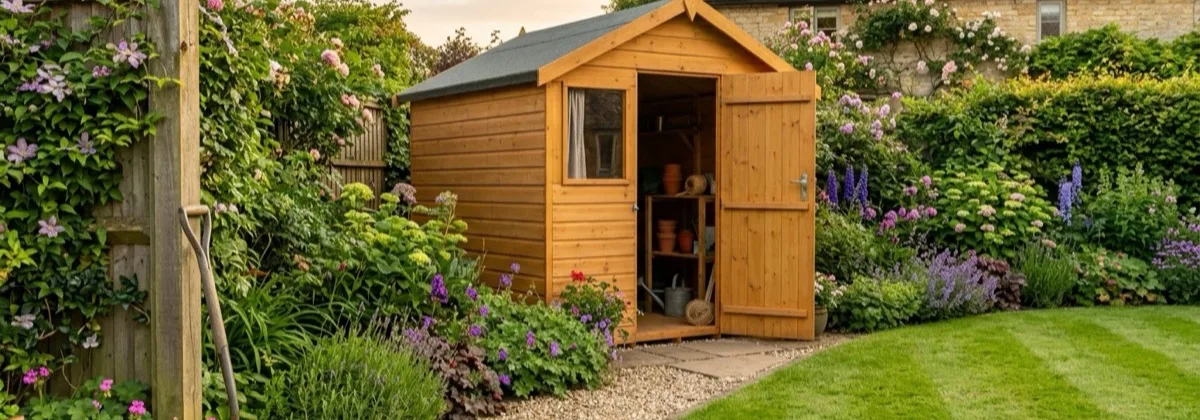
You have outgrown the shed, or the shed has outgrown you. Either way the building itself is fine: dry, square, solid, years of life left in it. Breaking a sound shed for the skip is a waste of money twice over, once for the disposal and once for the value you burned, because second-hand sheds sell, and sell quickly, to a market of buyers who want exactly what you have: a proven building at half the price of new. This guide covers the whole journey of selling a shed properly: deciding whether yours is stock or salvage, pricing it, photographing it, listing it honestly, handing over the paperwork, taking it down without wrecking it, and getting it moved.
Everything a used-shed buyer is nervous about is listed in our ex-display and second-hand buyer's guide. Read it as a seller and you know exactly which fears your listing needs to answer. Honest sellers borrow the buyer's checklist.
Is It Worth Selling? Stock or Salvage
Buyers of used sheds will forgive faded timber, an ageing felt and cosmetic scuffs. They will not forgive rot, and nor should you sell it to them. Ten minutes with a screwdriver settles which category your shed is in.
- Probe the frame at the bottom of each corner and along the base rails, the places water sits. Sound timber resists the point; rot takes it like sponge cake.
- Walk the floor. Springy boards near the door are wear; a soft, dark, damp-smelling floor is structural rot.
- Sight along the roof. A straight ridge and firm boards under the felt are what you want. Sagging between rafters means the roof deck is on its way out.
- Open and close the door. Seasonal sticking is normal and worth mentioning in the listing. A door frame moving independently of the wall is not.
Pass those four and you have stock. Fail them and be honest with yourself: strip it for re-usable cladding, hinges and glazing, or list it free for collection as materials, which costs you nothing and still beats a skip. A borderline shed can often be promoted back into stock cheaply: a £30 re-felt using our felt guide and a fresh coat of treatment from the timber treatment guide transform both the photos and the price.
What a Used Shed Is Actually Worth
The market anchors to the new price, so start there: find what your shed, or its nearest current equivalent, costs new today. Then apply the second-hand reality:
| Condition | Typical value vs new | Example: £500-new 8x6 |
|---|---|---|
| Nearly new (under 2 years), branded, treated | 40 to 55% | £200 to £275 |
| Good order, 3 to 7 years, kept up | 25 to 40% | £125 to £200 |
| Sound but tired: faded, felt due | 15 to 25% | £75 to £125 |
| Rot in frame or floor | Salvage or free to collector | £0 to £40 |
Three adjustments move you within those bands. Season: sheds sell best from March to June when the whole country is in the garden; a February listing needs sharper pricing or patience. Dismantling: a shed you have taken down, labelled and bagged is worth more than one the buyer must strip themselves, because it opens the sale to anyone with a medium van. Extras: shelving, workbench, a good hasp and staple lock, or a stack of spare treated timber all fatten the price for pennies of effort. The base, whether slabs or concrete, stays with your garden; the buyer needs their own, and linking them to a foundation guide in your listing is the kind of touch that wins a sale.
To sanity-check the new-equivalent price, our shed cost breakdown shows what the materials alone are worth at current merchant prices, a persuasive line for your listing when a buyer quibbles: the timber in a sound 8x6 is worth more than the asking price before a single panel is assembled.
Where to Sell It
Sheds are bulky, local goods, so the venues that win are the ones built for local collection.
- Facebook Marketplace is where used sheds actually sell in the UK. Free to list, local reach, buyers expect to collect, and the messaging keeps everything in one place. List here first.
- eBay works as an auction with "collection in person" set, which protects you from distance-shipping questions. Fees apply; use it when you want the widest audience or a true market price for a desirable building.
- Gumtree and Nextdoor cost nothing and skew local and practical. Nextdoor in particular reaches the neighbour two streets over with a van and a Saturday free.
- The fence-post method still works: a photo and a price on the community board, or a word at the allotment. Allotment holders are the most reliable shed-buying population in Britain.
Anyone offering more than asking price and a refund of the difference is a scammer, no exceptions. So is the buyer who cannot view but will "send a courier once you pay the shipping fee". Real buyers view, haggle a little and collect. Take cash on collection or a bank transfer that has landed before a single panel leaves the garden.
Photographing It Properly
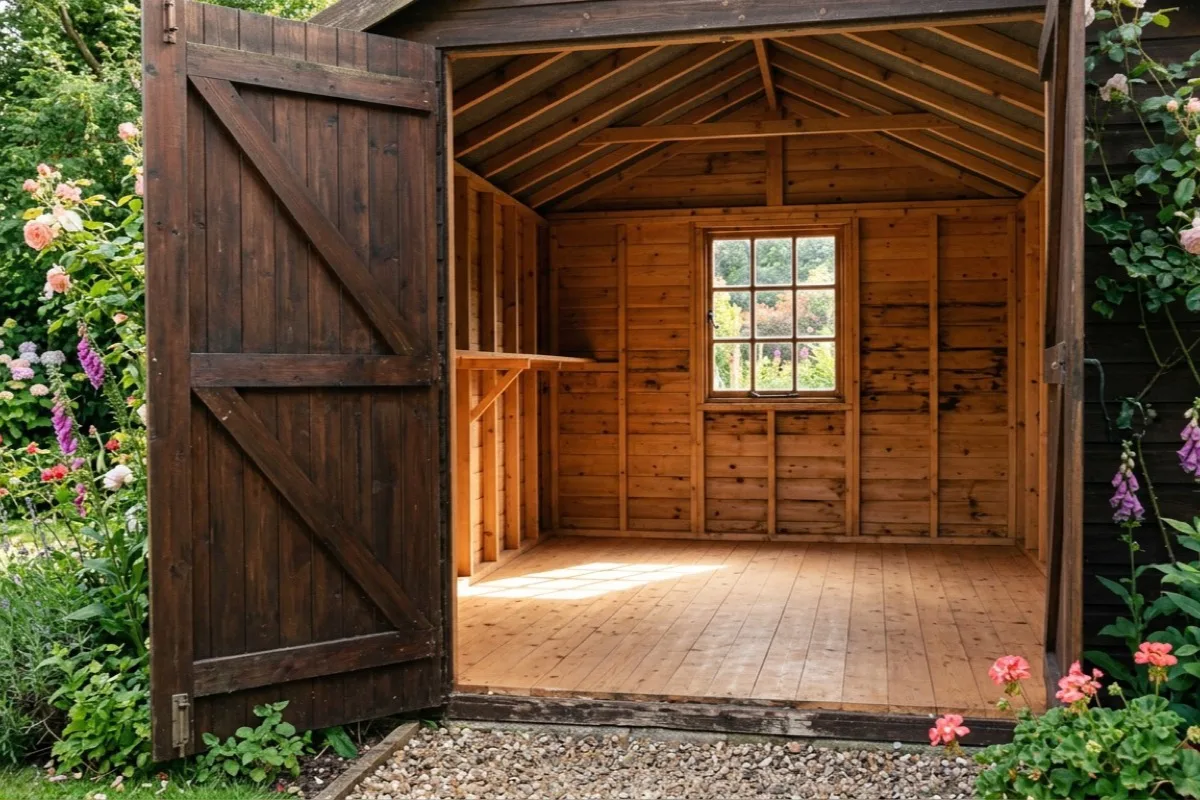
Listings live and die on the first photo, and shed photos are easy to get right because the subject stands still in a garden.
- Empty it and sweep it. A shed full of bikes and compost photographs like a problem; an empty one photographs like a building. This is the single biggest uplift available and it is free.
- Mow and trim around it. Cut the grass, pull the bindweed off the back wall, sweep the roof. Five minutes with shears reads as five years of care.
- Shoot in soft light. Early morning or evening sun makes timber glow; harsh midday light makes every shadow a defect. Overcast beats blazing.
- Cover the full set: a three-quarter hero shot, all four sides, the roof from a step ladder, the open door showing the interior, the floor, and the door furniture. Eight to twelve photos, landscape orientation, phone camera is plenty.
- Photograph the flaws on purpose. A clear close-up of the scuff, the faded panel, the tired felt corner. It feels counter-intuitive and it is why your buyer turns up relaxed instead of renegotiating on the lawn.
Writing an Honest Listing
The listing's job is to answer every question a careful buyer would ask, before they ask it. The structure that works:
- Headline: size, type, one selling point. "8x6 apex shed, pressure treated, 4 years old" beats "SHED BARGAIN MUST GO".
- Measurements: footprint in feet and metres, plus eaves and ridge height. Buyers are checking a fence line and a permitted-development height; give them the numbers and link them to a planning rules guide if the shed is tall.
- Age and history: when bought, from where, what it has been used for, when last treated, when the felt was last done.
- Brand and model if it has one, which unlocks the paperwork trick below.
- Every defect, plainly: "door catches in wet weather", "felt serviceable but due within two years", "one cracked pane, glazing bead intact". Honesty is not generosity, it is dispute insurance: a defect disclosed in writing cannot become a collection-day discount demand.
- The logistics paragraph: dismantled or standing, what is included, access notes ("rear garden, side gate, 90cm wide"), collection window, and who does the taking-down.
Manuals, PDFs and Paperwork: the Free Value-Add
If your shed came from an established brand, its assembly instructions almost certainly still exist as a PDF on the manufacturer's website. Forest Garden, Shire, Mercia, Power, BillyOh, Keter and most of the big names host instruction sheets for current and recent models, and a search for the brand, model and "assembly instructions PDF" usually lands it in seconds. Download it, print a copy for the handover and email the file to your buyer.
This costs you nothing and does three jobs at once: it proves the shed is what you say it is, it converts a daunting pile of panels into a buildable kit in the buyer's mind, and it quietly justifies your asking price over the unbranded shed three listings down. Add whatever else exists: the original order confirmation, any remaining anti-rot guarantee (many pressure-treated buildings carry 10 or 15 year guarantees, some transferable), receipts for the last felt and treatment, even the tin of matching stain with a third left.
If the shed is one you built yourself from a cutting list, you hold something better than a manual: the design itself. A shed designed in our free builder comes with a complete materials and cutting list, and passing that print-out to your buyer is the self-build equivalent of the manufacturer's PDF, plus it proves the build quality: they can see exactly what went into the frame.
Dismantling Without Wrecking It
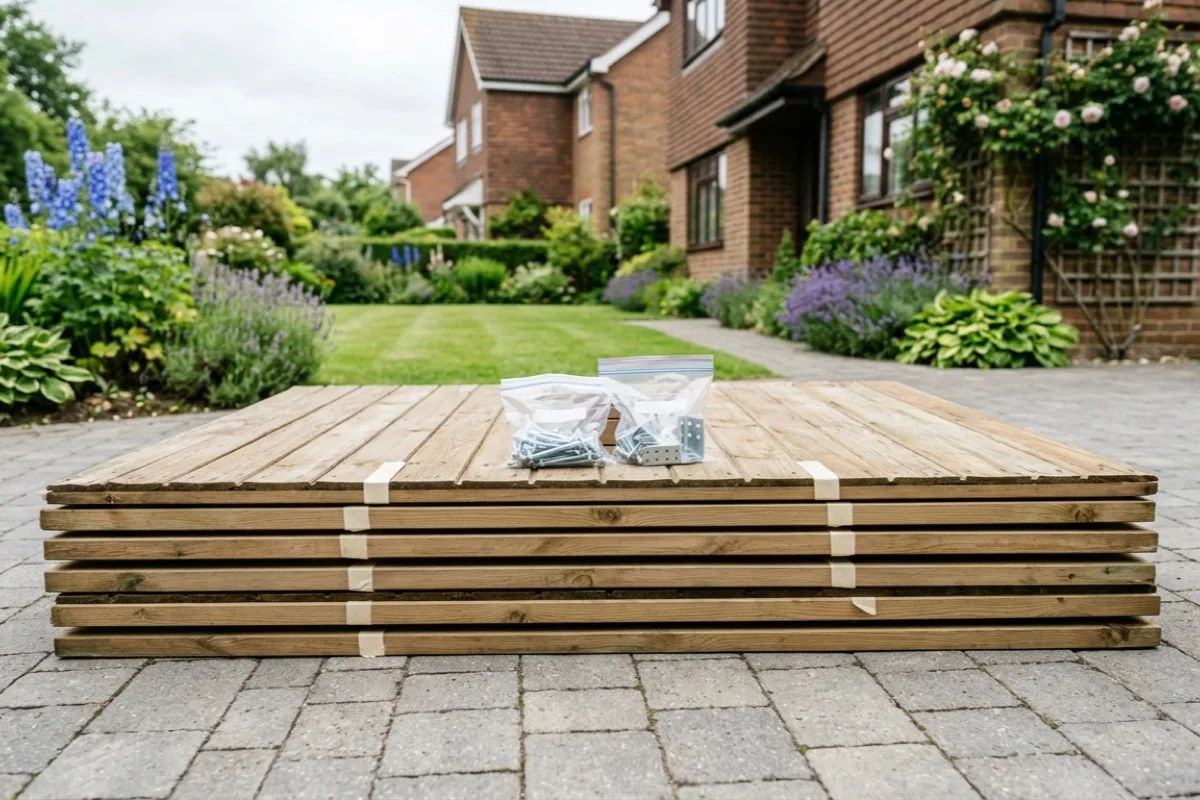
A panel shed goes down the way it went up, in reverse. Allow half a day with two people for a 8x6, longer for anything bigger or anything screwed and nailed.
- Empty it, then strip the fittings: shelving out, hooks off, door furniture left on the door.
- Doors off the hinges, windows protected. If glazing lifts out, wrap panes in cardboard and tape; if fixed, brace across the frame with a screwed batten.
- Decide about the felt. Old felt tears on dismantling, so strip it and price the shed accordingly; the buyer re-felts in an afternoon. Nearly-new felt or EPDM on solid roof panels can travel with the panels if you are gentle at the edges.
- Roof panels first, then any ridge bar, then gables, then side walls, then the floor last. Unscrew, never crowbar: a nailed joint that resists is worked apart with a rubber mallet from inside.
- Label as you go. Masking tape and a marker on every panel edge, a simple code on each ("rear wall", "left side front"), and every batch of fixings into a freezer bag taped to the panel it came from.
- Photograph every stage. Ten photos taken during dismantling, sent to the buyer, are a bespoke reassembly manual and the single most appreciated thing a shed seller can provide.
If the buyer is dismantling instead, your job is access, a power socket for their driver-drill, and patience. Agree in writing (a Marketplace message is writing) that the shed is sold as seen, that payment happens before the first screw, and that making good the base and fence is not your job to demand nor theirs to expect.
Couriers and Transport
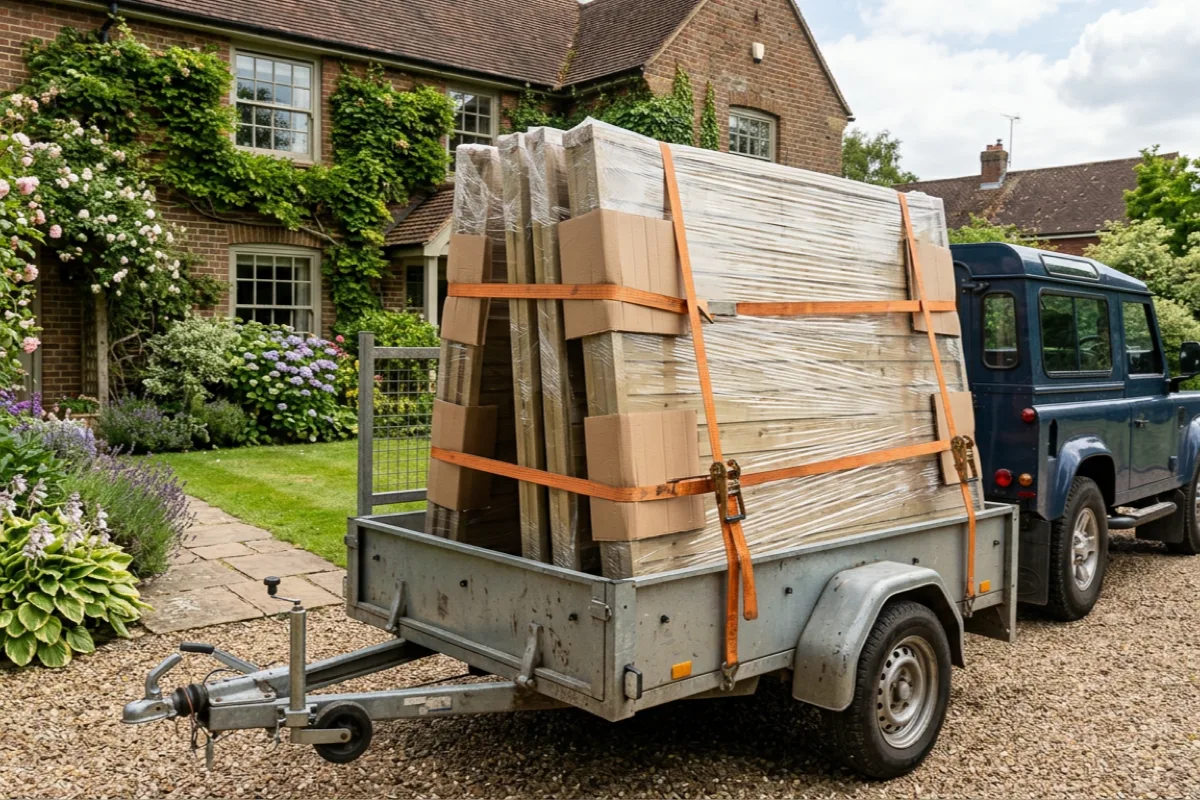
Transport is the hard third of every shed sale, which is why local buyers are gold. The realistic options, cheapest first:
- Buyer collects with a van, pickup or trailer. An 8x6's panels weigh 150 to 250kg all-in and the longest pieces are the roof panels, around 2.5m: a medium wheelbase van or a decent trailer swallows it. Two people to load, always.
- Man-and-van services bridge the gap for buyers without wheels, typically £40 to £80 for a local move plus loading help. The buyer books and pays; you just have the stack ready at the front.
- Pallet freight is the answer for distance sales: panels stacked flat on a standard pallet, strapped, corners protected, shrink-wrapped, collected from your kerbside and delivered to theirs, roughly £60 to £150 within mainland UK depending on distance and weight. You will need to build the pallet properly; the freight firm's site tells you their max dimensions and how they want it wrapped.
- Protect the pretty faces. Whatever the mode, cladding faces inward or gets cardboard, straps get corner protectors, and glazing travels flat between floor panels, never upright in a stack that can shuffle.
Custom and convention both say the buyer arranges and pays for transport. Your listing states it, kindly: "buyer collects or arranges courier; I will have everything packed, labelled and ready to load."
Payment and Handover
- Payment lands before dismantling starts, whether that is cash counted at the gate or a bank transfer showing in your account, not a screenshot of one.
- A deposit holds the shed. For a buyer who needs a week to sort a van, a 10 to 20 percent bank-transfer deposit is fair and filters the time-wasters.
- Write a two-line receipt, one copy each: date, item, price, "sold as seen, buyer inspected". It settles every future conversation before it starts.
- Help them load. Two minutes of lifting buys a five-star buyer experience, and the used-shed world is smaller than you think: allotments talk.
Frequently Asked Questions
How much is a second-hand shed worth?
Typically 25 to 50 percent of the current new price for a sound, cared-for building: £125 to £250 for a shed that costs £500 new. Branded, pressure-treated and nearly-new examples sit at the top; anything with structural rot is salvage money.
Where is the best place to sell a used shed?
Facebook Marketplace first, because shed buyers are local collectors. eBay (collection only), Gumtree, Nextdoor and the allotment noticeboard cover the rest.
Who should dismantle it, me or the buyer?
Doing it yourself, with labelled panels, bagged fixings and stage photos, earns a higher price and a wider market. Buyer-dismantles is easier for you; agree payment, timing and sold-as-seen in writing first.
Can you send a shed by courier?
Dismantled, yes: pallet freight moves flat-stacked panels nationwide for roughly £60 to £150, and man-and-van covers local moves. The buyer books and pays; you pack and label.
Plan your next shed
Choose a size that suits your garden, explore the materials and compare building with buying ready-made.
Design your next shed →