How to Install Shed Roofing Felt: A Step-by-Step Guide
Learn how to felt a shed roof properly. Covers choosing felt, tools, prepping the deck, overlaps, fixing centres and finishing the eaves on apex and pent roofs.
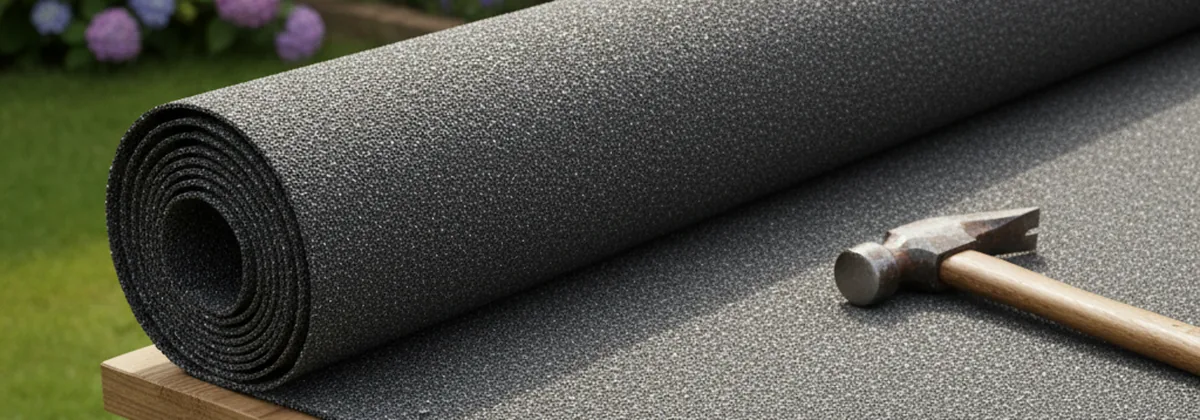
The felt is the only thing standing between your shed and the British weather, so it pays to get it right. A shed roof can be built dead square with the best timber going, but if the felt is loose, the laps face the wrong way, or it is nailed too sparingly, the rain will find its way in and rot the deck within a couple of winters. The good news is that felting a shed roof is well within the reach of a capable DIYer. Take your time, work on a dry day, and follow the order of work and this is a job you can be proud of for years. This guide walks you through felting both an apex and a pent timber shed roof from start to finish.
Felt only performs as well as the deck and the cladding beneath it. Make sure the roof deck is sound and the walls shed water properly first. If you are still weighing up timber options for the building itself, our shed cladding options compared guide is worth a read before you climb up top.
Choosing Your Felt
Not all roofing felt is the same, and the type you pick decides how long the roof will last before you are back up the ladder. There are two broad choices for a garden shed.
Standard Mineral Shed Felt
This is the green, grey or red felt you see on the shelf at every builders merchant. It is a bitumen-coated base with a mineral chipping surface, sold in rolls, and it is cheap and easy to handle. It is the usual choice on a budget shed. The trade-off is lifespan: it tends to dry out, go brittle and crack after around 5 to 10 years, especially on a roof that bakes in the sun.
Polyester and Torch-On Felt
A step up is a heavier polyester-reinforced felt, including the torch-on grades used on flat roofs. The polyester carrier makes it far tougher and more flexible, so it resists tearing and cracking and copes better with the timber moving as it expands and shrinks. Properly fitted, it can last 15 to 20 years or more. It costs more and torch-on work needs a gas torch and some care, but on a shed you want to use long term it is money well spent.
Buy one grade up from the cheapest roll on offer. The price difference over a small shed roof is a few pounds, but the better felt will see off many more winters and save you stripping and re-felting a damp deck down the line.
What You Need
Felting a shed needs surprisingly little kit. Get it all together before you start so you are not climbing down halfway through with the felt half fixed.
- Roofing felt to suit your roof, with enough for all overlaps plus a capping strip on an apex roof.
- Galvanised clout nails, 13mm to 20mm long, with broad flat heads. The galvanising stops rust streaks and the wide head grips the felt without tearing through.
- Felt adhesive (cold-applied bitumen) for bedding the laps and any awkward edges.
- A sharp utility knife with spare blades. Felt blunts a blade fast and a dragging blade tears rather than cuts.
- A straight batten or straight edge to cut against and to weight the felt down.
- A tape measure, a claw hammer and a nail punch.
Match the nail to the deck thickness. On thin 9mm to 12mm OSB or ply, a 13mm clout bites without poking through the underside; on thicker decks you can go up to 20mm. A nail point showing under the roof is both a leak path and a hazard to your head.
Preparing the Deck
A good felt job starts under the felt. The deck, usually OSB or plywood nailed to the rafters, has to be sound, dry and smooth. Felt laid over a poor deck will sag, split and let water track in, so do not skip this.
- Check the deck is sound - Walk it gently and look for soft, springy or delaminated patches of OSB or ply. Cut out and replace anything that is wet or rotten. The deck wants to be a continuous, firm surface with no bounce.
- Fix loose boards - Re-nail or screw down any boards that lift or rattle. A board that moves under foot will work the felt loose over time.
- Punch the nails - Go over the whole deck with a nail punch and drive any proud nail heads just below the surface. A single proud head will cut through the felt from below within a season.
- Sweep it clean - Brush off all grit, splinters and sawdust. Anything left under the felt becomes a lump that wears a hole in it.
If you are building the shed from the ground up and want the base and structure right before you reach the roof, our guide on how to build a shed foundation sets the whole thing on the right footing.
Measuring and Cutting
Measure each pitch (roof slope) for its width and its length down the slope, then add your overlap allowances on top. You always want to cut generous and trim back, never cut tight and find yourself short at the eaves.
Allow an extra 50mm to 75mm at every side lap and eaves lap, plus enough overhang at the eaves to dress the felt down over the edge and into a drip. On an apex roof, allow extra at the ridge so each pitch can run up and over, and cut a separate capping strip wide enough to lap generously down both sides of the ridge.
Roll the felt out on a clean, flat surface to mark and cut it. Cut against a straight batten with a sharp knife in one firm stroke. Let the felt relax and lie flat before you fix it: felt straight off a tight roll wants to curl back up and fight you.
Lay the cut sheets flat in the sun, or somewhere warm, for half an hour before fixing. Warm felt is supple, beds down flat and takes the shape of the roof. Cold, stiff felt cracks at the folds and will never sit right.
The Order of Work
The golden rule of felting is the same as any roof covering: water runs downhill, so every join must shed water over the lap below, never into it. How you achieve that depends on the roof shape. If you are still deciding between the two shapes for a new build, our apex vs pent roof sheds comparison will help.
Apex Roof
An apex roof has two pitches meeting at a ridge. You felt each pitch first, then cap the ridge.
- Felt the first pitch - Lay the felt across the pitch, square to the eaves, with the bottom edge overhanging ready to dress into a drip and the top edge running up to the ridge.
- Felt the second pitch - Cover the opposite pitch the same way, again running the top edge up to the ridge so both sheets meet at the apex.
- Fit the capping strip - Lay a separate strip of felt along the ridge, lapping generously down over both pitches so it sheds water onto them. This capping is what keeps the ridge watertight, so do not skimp on its width.
Pent Roof
A pent roof is a single slope, higher at one side than the other. Here the rule is to start low and work up.
- Start at the low edge - Fix the first sheet along the low eaves, overhanging ready for a drip, and work across the width of the roof.
- Work up the slope - Lay each following sheet higher up, lapping it down over the top of the sheet below so water sheds down over the join. Never lap a lower sheet over a higher one or you have built a funnel straight into the deck.
- Finish at the high edge - Carry the top sheet up over the high edge and dress it down so the back of the roof is sealed too.
Laps, Fixings and Adhesive
This is where a tidy job is won or lost. Get the laps and the nailing right and the roof will keep water out for its full life.
Laps
Side and eaves laps want to be around 50mm to 75mm. Always arrange the lap so the upper sheet sits on top of the lower one and water runs over the join. A lap facing into the prevailing weather will let wind-driven rain creep under it, so think about which way the wet comes from.
Fixing Centres
Nail close along the overlaps, at roughly 50mm centres, because the laps are where wind tries to lift the felt. Across the open field of the sheet you can space the nails wider, around 150mm. Always follow the felt maker's stated centres if they differ, as the better polyester felts sometimes call for their own pattern.
Adhesive
Run a band of cold felt adhesive into every lap before you nail it, so the two layers bond into one and the join is sealed against water tracking through the nail holes. Adhesive plus nails, not one or the other, is what makes a lap watertight.
The single most common cause of felt blowing off a shed is too few nails along the laps and edges. Wind gets under a loose edge, peels it back like a sardine tin, and the next gust takes the lot. Close, even nailing along every lap and edge is cheap insurance.
Eaves, Drip and Verges
The edges are where rainwater leaves the roof, so they need finishing properly or the water will run back under the felt and into the timber.
- Dress the eaves over the edge - Fold the overhanging felt down over the eaves and fix it to the edge of the deck or the fascia so water is carried clear and drips off, not back under.
- Fit the fascia and drip batten - A fascia board across the eaves tidies the edge and gives the felt something to be dressed onto. A drip batten (a thin batten fixed under the felt edge) kicks the water out and away from the wall and cladding below.
- Finish the verges - At the gable verges (the sloping side edges of an apex roof), wrap the felt down over the barge or verge edge and nail it off, so wind and rain cannot get a hold of the edge.
Stand back and check the whole roof once it is done: every lap shedding the right way, every edge dressed down and nailed, no proud nails and no air pockets. A roof felted like this will keep your shed dry through the worst a British winter can throw at it.
Common Mistakes to Avoid
Cold felt goes stiff and brittle and cracks the moment you bend it over an edge. Work on a mild, dry day and let the felt warm and relax first.
Sparse nailing, especially along the laps and edges, is the number one reason felt blows off. Nail close and even at the laps and let the wind find nothing to grip.
If a lower sheet laps over a higher one, the join funnels water straight into the deck. Always lap the upper sheet over the lower so water sheds over the join.
On a warm day or after torching, the felt softens and your boots will scuff, stretch and tear it. Keep off it until it has cooled and set, and tread on a board if you must reach across.
Summary
Felting a shed roof is a straightforward job when you follow the order of work and respect the details:
- Choose the right felt - cheap mineral felt for 5 to 10 years, polyester or torch-on for 15 to 20 years plus
- Prepare the deck - sound boards, nails punched flush, swept clean
- Apex roof - cover each pitch, then a generous capping strip over the ridge
- Pent roof - start at the low edge and work up so the laps shed water
- Laps and fixings - 50mm to 75mm laps, adhesive in every lap, nails at roughly 50mm along laps and 150mm in the field
- Finish the edges - dress over the eaves into a drip, fit fascia and a drip batten, wrap the verges
Take your time, work on a dry day, and the roof will keep your shed dry for years.
Planning a New Shed Build?
Use our free shed builder tool to design your shed, choose the roof shape and get a complete materials list including the felt.
Start Building Now