Winning Over a Sceptical Partner (the Real Planning Authority)
Let's address the question every pub shed builder asks quietly at the end: "how do I get this past my wife?" It is the great running joke of shed culture, planning permission from the council is easy, planning permission from the household is the hard part, but underneath the joke is a real negotiation, and the builders who win it all do the same things. Here are the classic objections, and the answers that actually work (they work in both directions, incidentally; plenty of the best garden bars in Britain were her idea in the first place).
The five objections, answered honestly
"It's a load of money for somewhere to drink beer." Do the maths out loud, because it is genuinely startling. A night out for two, taxis, drinks and food, rarely leaves change from £80–£100. A takeaway-and-babysitter evening is not far behind. A mid-tier pub shed at £2,000 pays for itself in twenty stayed-home Saturdays, runs for about £150 a year, and unlike a night out, it is still there the next morning. Frame it as buying twenty years of nights out at a fixed price and the numbers argue for you.
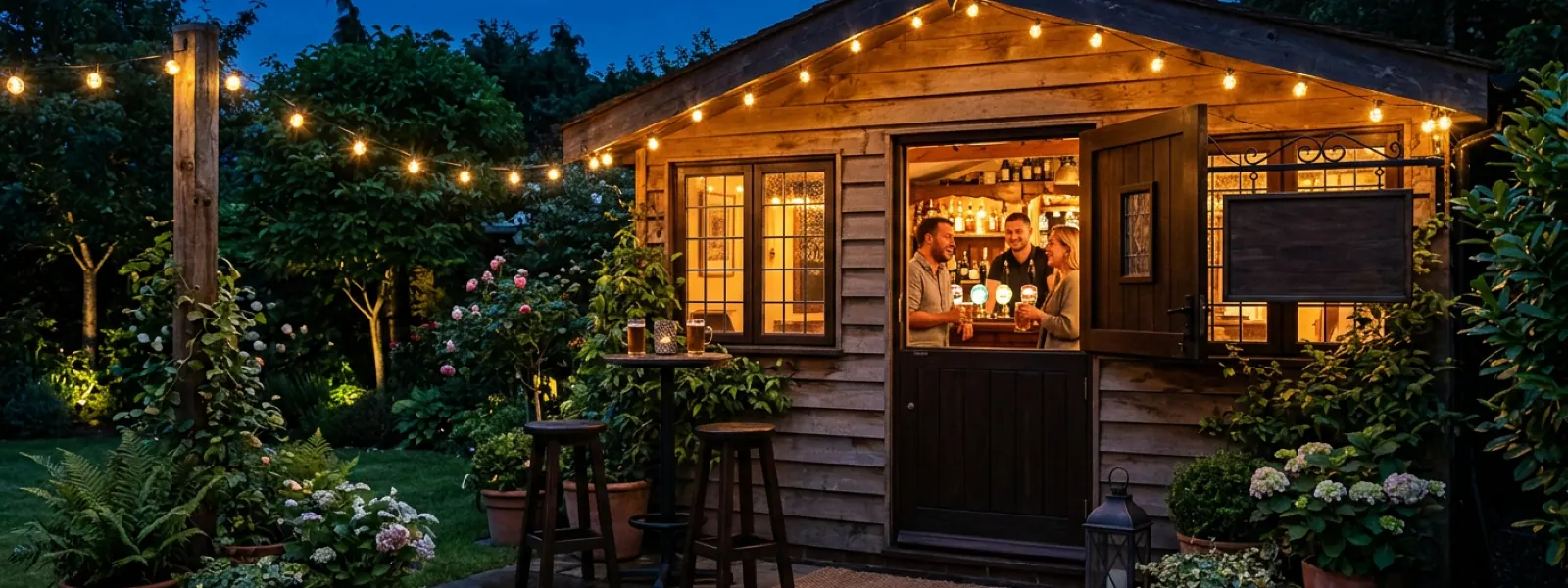
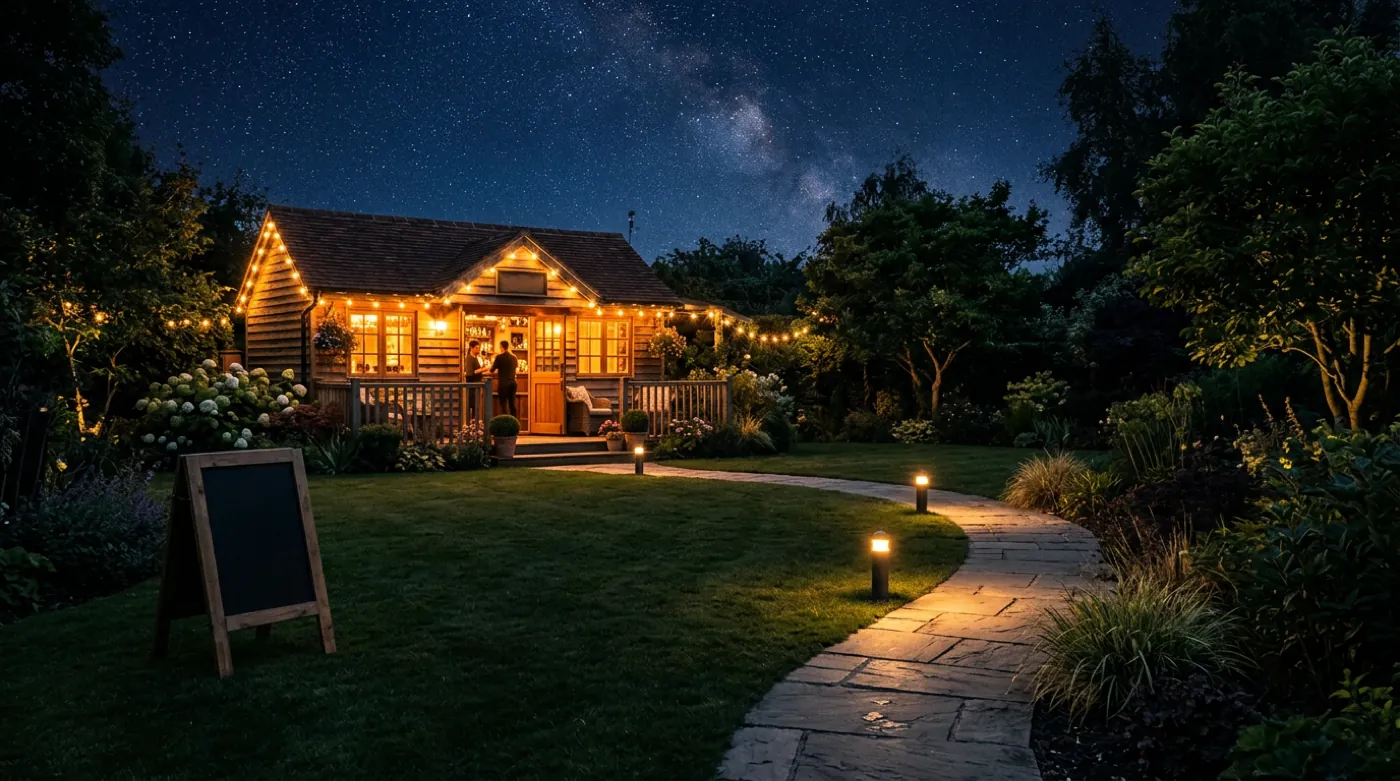
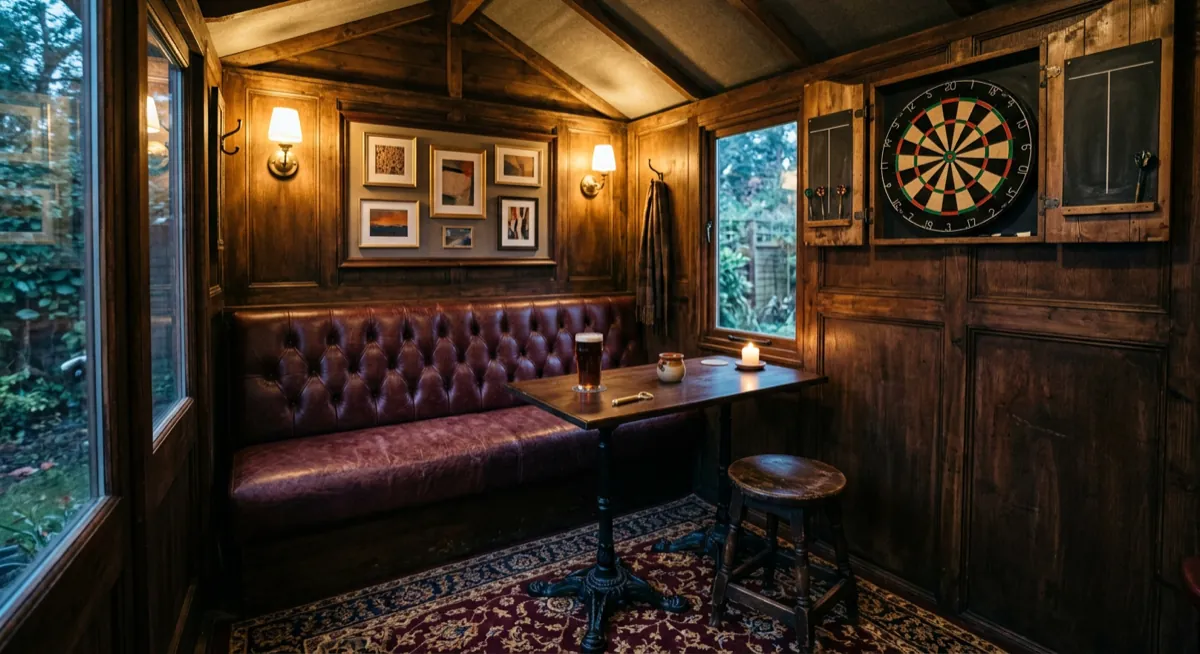
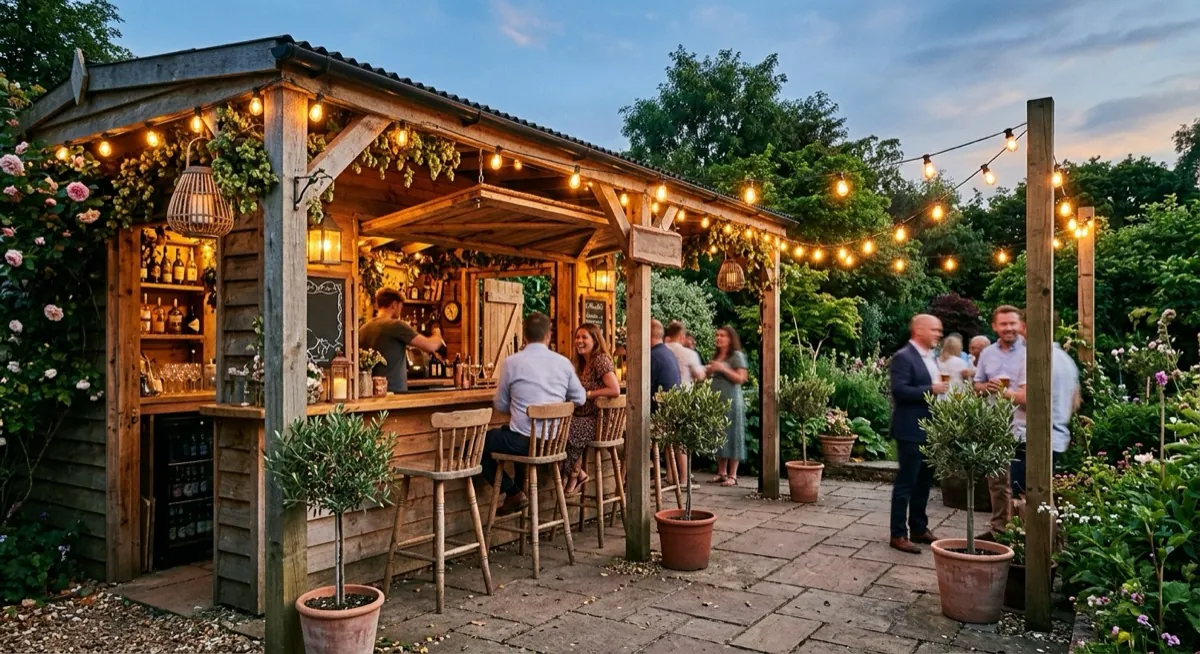
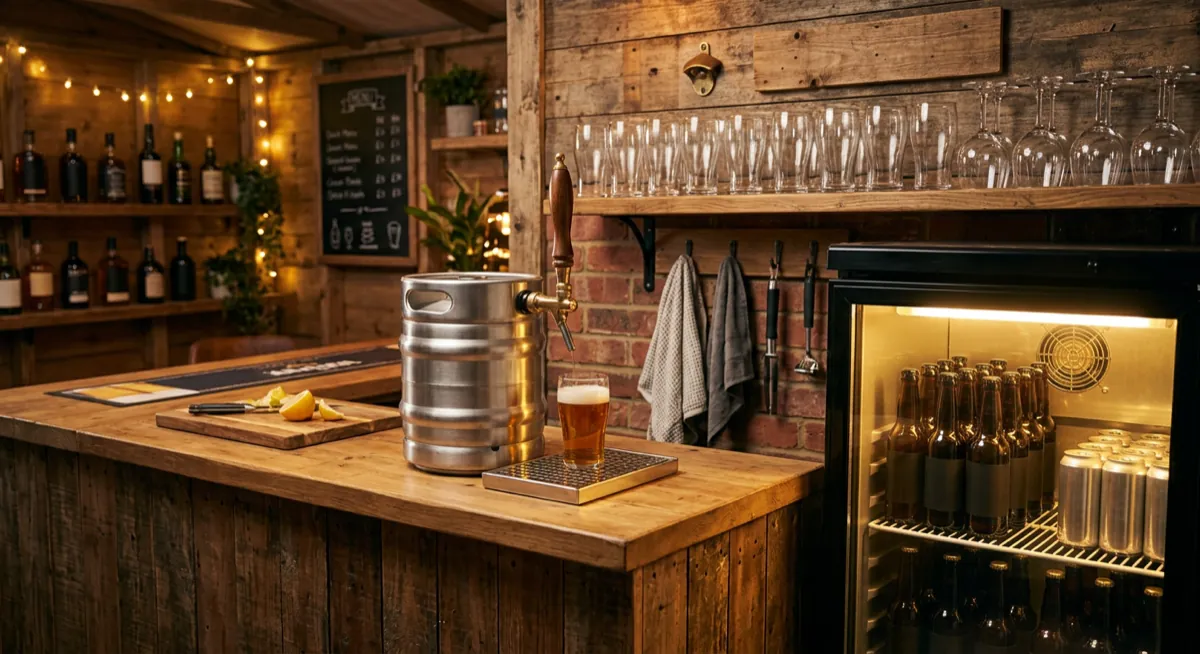
"You'll disappear into it and I'll never see you." The strongest answer is a design decision, not a promise: build a pub for two, not a bolt-hole for one. Two comfortable seats at the bar, her drinks in the fridge as well as yours, warm lighting rather than dartboard-and-neon. The pub sheds that cause arguments are hideouts. The ones that become the heart of the house are date-night venues you do not need a babysitter for.
"It'll be full of your mates every weekend." Agree the licensing terms up front, like the real pub it is: which nights are open-house, what time last orders is, and that the landlady holds a permanent veto. A pub shed with agreed opening hours causes fewer rows than a fortnightly restaurant bill. And notice what happens in practice: within a month, the regulars are just as likely to be her friends as yours.
"Is all that drinking at home really a good idea?" Flip it, because home is the responsible venue: nobody drives anywhere, ever. Nobody is queuing for a taxi at midnight in the rain. The kids are asleep forty feet away within range of the monitor, rounds cost pennies so nobody feels obliged to "get their money's worth", and you are in your own garden rather than town at closing time. For parents especially, the pub shed is the safest social life there is.
"You'll start it and never finish it, like the decking." Fair, which is why the proof-of-concept tier exists. Propose the £500 version first: one weekend, no electrician, minimal risk. If the household is drifting down the garden all summer, the upgrade approves itself. If not, you have lost a weekend and gained a tidy shed.
The masterstrokes
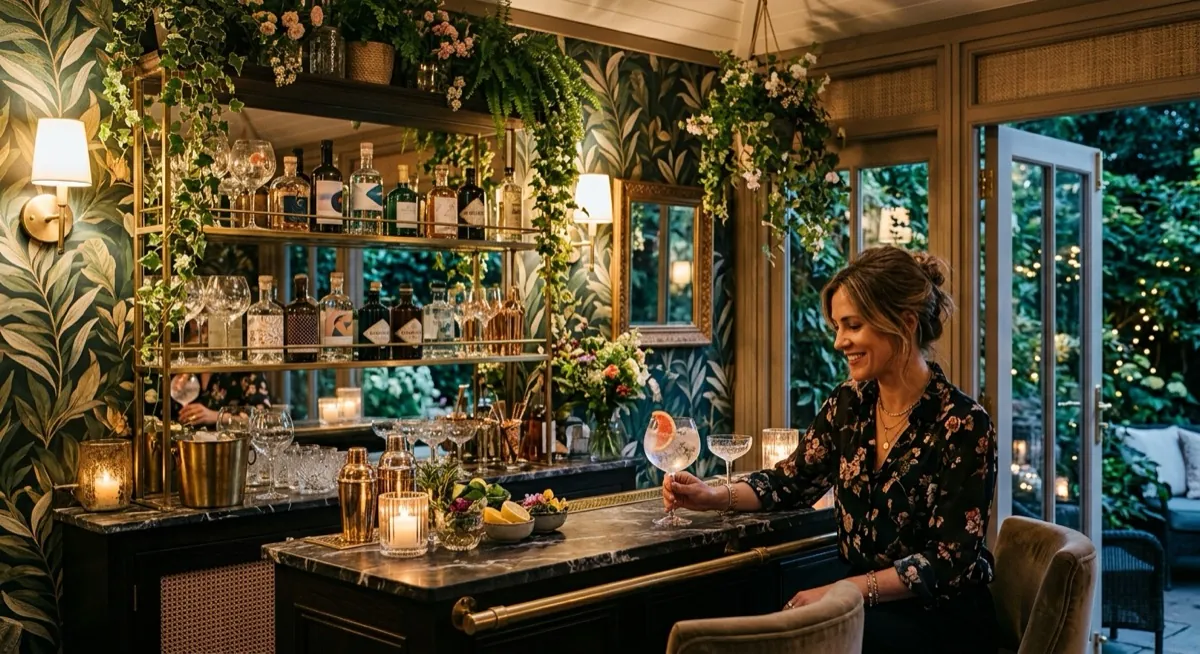
- Open with her night, not yours. The single best move in the book: the pub's first proper event is a gin night for her friends. Balloon glasses, decent tonics, garnish bowl, candles. Do this once and the shed stops being "your project" in conversation and becomes "our bar" by the second round.
- Give her the keys to the look. A shared veto on colours, lighting and the sign turns a sceptic into a co-designer. (This is also, quietly, how the best-looking pub sheds get built; see The Gin Palace above.)
- Make it earn daylight hours. A bar that is also a lovely morning-coffee spot, a reading corner or a Friday-afternoon office justifies its footprint seven days a week instead of two evenings.
- Name it together. The couples' classic is a portmanteau of both names over the door. Corny, beloved, and completely disarming.
- Concede the garden trade. The time-honoured settlement: the pub shed happens, and so does the thing she has wanted for three summers, the good garden furniture, the re-turfed lawn, the climbing rose. Every treaty has two signatures.
The one-word summary
Every argument above collapses into a pronoun: pubs called "ours" thrive, pubs called "mine" gather dust and resentment in equal measure. Design for two from the first sketch and the negotiation mostly handles itself.