How to Build a Pub Shed: The Ultimate Garden Bar Guide
Build your own pub shed and garden bar at home. A practical, tradesman-friendly guide to planning, base, shell, insulation, power, fitting the bar and match nights.

There is a special kind of joy in walking down the garden, lifting the latch, flicking on the lights and pulling yourself a pint in your own local. No last orders. No taxi home. The best seat in the house always free. A pub shed is the most fun you can have with a few lengths of timber and a bag of screws, and once it is up you will wonder how you ever managed without it. This guide walks you through the lot, from the base to the back bar, in proper plain English. If you want to see what is possible, have a look at our pub shed range for a bit of inspiration before you start.
A pub shed is a year-round room, not a summer hut. Build it like one: a dry base, a watertight shell, proper insulation and power put in by a qualified electrician. Get the bones right and the fun bits look after themselves.
Why a Pub Shed?
Ask anyone who has built one and they will give you the same grin. A pub shed is your bolthole, your snug, your own little corner of the world where the only rules are the ones you make. It is somewhere to escape to when the house is full, and somewhere to fill the house out to when the mates come round.
Match nights are where a pub shed really earns its keep. No fighting for a stool at a packed bar, no queuing three deep at half time, no being shushed for cheering. Just you, your mates, a cold one in hand and the game on the big screen. The same goes for a quiet Friday pint, a summer barbecue that drifts into the evening, or a proper knees-up when there is something worth celebrating.
It is also, let us be honest, a grand excuse for a project. You get to build something with your own hands, kit it out exactly how you like, and end up with a space that pays you back every single weekend. Few jobs around the house give you that.

Planning Permission and the Rules
Before you order a single board, get the rules straight in your head. The good news is that most pub sheds sit comfortably within permitted development, which means you can build without a planning application. The usual limits apply: the building must be single storey, kept to the back garden, not too close to a boundary if it is tall, and it must not eat up too much of your outdoor space. Heights are capped too, especially within two metres of a boundary.
The one thing a pub shed must not be is living accommodation. It is an outbuilding for leisure, not a place anyone sleeps in, and that distinction keeps you the right side of the rules. Our full foundation guide covers the groundwork, but for the planning side it is well worth reading our dedicated shed planning permission guide before you commit.
Keep it private and you need no licence at all. The moment you sell alcohol or charge for entry, though, you are running a licensed premises, which needs a premises licence and a personal licence holder. For mates round with no money changing hands, you are fine. Start a tab and take cash and you are not.
Size and Where to Put It
How big you go depends on what you want from it and how much garden you can spare. There is no wrong answer here, only the one that suits your plot and your plans.
- A cosy two-stool bar fits into about 2.4 metres. Room for you, a mate, a couple of stools and a few bottles. Snug, cheerful and cheap to build.
- A proper bar for mates wants around 4 metres by 3 metres. Enough to gather a small crowd around the bar, fit a fridge and a back shelf, and still swing a pint glass.
- A games area needs roughly 5 metres by 4 metres if you want a dartboard, a pool table or a card school as well as the bar.
For help pinning down the right footprint, our guide to choosing the right shed size is a good read, and you can sketch the whole thing out and get a materials list using our pub shed builder. Pick a spot that drains well, sits reasonably level, and is close enough to the house to run power without a marathon cable run. A south-facing corner that catches the evening sun never hurt anyone either.
The Base
Everything rests on the base, so this is no place to cut corners. A pub shed full of kit, drinkers and a heavy bar carcass needs a solid, level, dry footing or it will sag, twist and let damp creep up from below.
You have two sensible routes. A concrete slab gives you a flat, permanent, rock-solid base that will outlast the building, and it is the gold standard for anything you are fitting out properly. The alternative is a frame of sturdy treated bearers sat on a bed of compacted hardcore or paving slabs, which is quicker and cheaper and perfectly good if it is built well and kept off the wet ground.
Whichever you choose, get it level, get it dry, and lift the timber clear of standing water. Our shed foundation guide walks through both options in full, with the measurements and mixes you will need.
The Shell: Frame, Cladding and Roof
With the base down, you can build the box that becomes your bar. The shell is three jobs in one: a strong frame, weatherproof cladding and a roof that keeps the British weather where it belongs, outside.
The Frame
Frame the walls in 47x100mm treated timber at 400mm centres. That spacing gives you a stiff, sturdy wall, plenty of fixing points for the bar and shelves, and a cavity deep enough to take a decent thickness of insulation later. Build the wall panels flat on the base, stand them up, plumb and brace them, then tie them together at the top with a head plate.
Cladding
For the outside, shiplap and log lap are the two favourites. Shiplap gives that classic, crisp timber look and sheds water beautifully, while log lap gives a rounded, chunky, almost cabin-like finish that suits a country pub theme down to the ground. Both look the part. Our cladding options compared guide lays out the differences if you are torn.
The Roof
Top it off with either traditional roofing felt or an EPDM rubber membrane. Felt is cheap and well proven and does a grand job on a pitched roof. EPDM lasts longer, copes better with a flat or low-pitch roof and is more forgiving over the years. Our roofing felt guide takes you through laying felt step by step. If you would rather have the whole shell designed and priced for you, our pub shed builder will spec the frame, cladding and roof in one go.
Insulation, Power and Heat
This is the bit that turns a cold timber box into a room you will happily sit in on a frosty January match night. Skip it and your pub shed becomes a summer-only novelty that sweats with condensation the rest of the year.
Insulate the floor, the walls and the roof, and fit a vapour control layer to the warm inside face so warm, damp air from drinkers and the heater cannot drift into the structure and condense. Our shed insulation guide covers the whole job, layer by layer, and is essential reading before you line out the walls.
For power, do not chance it. Lighting behind the bar, a fridge or cooler, a telly and a heater all add up, and the wiring of an outbuilding falls under Part P of the building regulations. Get a qualified electrician to install and certify the supply. Our shed electrical installation guide explains what is involved, but the work itself is one for the professionals.
Running a new circuit out to a garden building is notifiable work under Part P. Always have it designed, installed and signed off by a qualified electrician. It keeps you safe, keeps your insurance valid, and means you can pull a pint without worrying about the wiring.
For heat, a small electric heater is usually all you need. A panel heater, an oil-filled radiator or a low-output infrared heater will take the chill off a well-insulated pub shed in minutes. Keep it clear of curtains and clutter, and let it run gently on cold days to keep surfaces warm and damp at bay.
Fitting Out the Bar
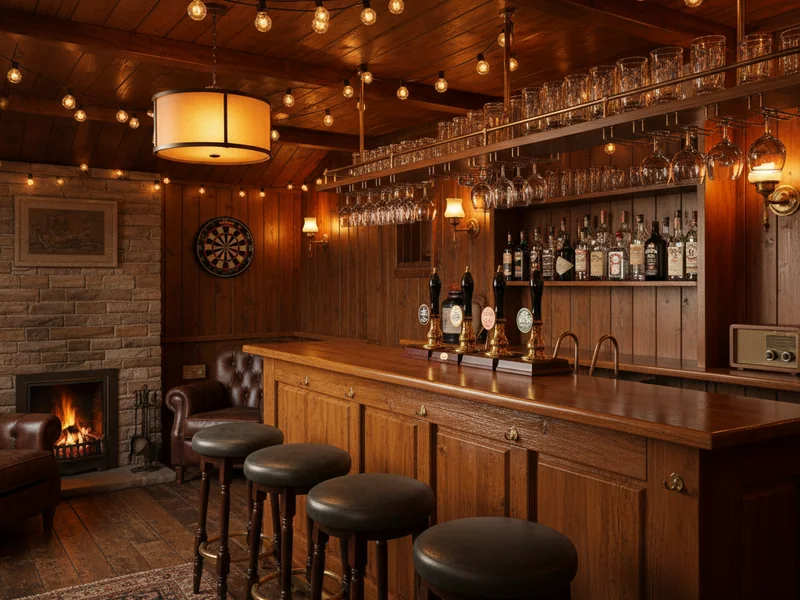
Here is the heart of it. The bar is the bit everyone gathers around, so it is worth taking your time and getting it right. Build the bar top at around 1050mm high, which is a comfortable height for standing drinkers and pairs nicely with bar stools that sit at roughly 750mm to 800mm.
Behind the bar, fit a back bar shelf for your bottles, optics and glassware, and a lower worktop for pouring and mixing. Leave yourself enough room to move and pour without cracking your elbows on the wall. A few well-placed lights over the back bar make the bottles glow and lift the whole room.
- Optics and glassware on the back bar for spirits and a proper selection of glasses.
- A fridge or under counter cooler to keep bottles, cans and mixers cold and within reach.
- An optional keg and pump or font if you fancy pulling proper draught. Run it off a cooled keg behind the bar with a CO2 line, and you have got your own draught beer at home.
Top the bar with a hard-wearing worktop that wipes clean and takes a few spills without complaint. A solid timber top sealed well, or a laminate worktop, both do the job and look the part.
Match Nights and Big Games
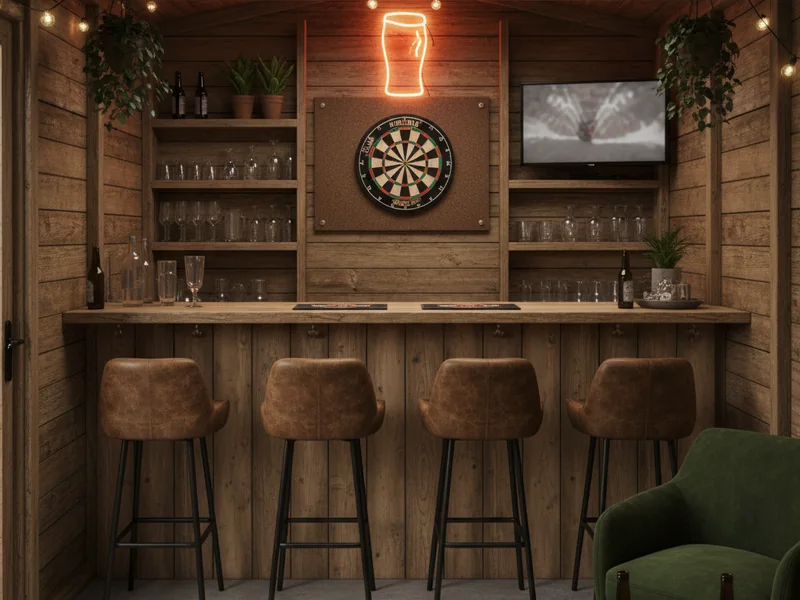
A pub shed comes alive on match day. To do it justice, get the telly and the sound sorted. A decent-sized screen mounted on the wall where everyone can see it without craning their necks is the centrepiece. Set it high enough to clear heads at the bar but low enough to watch in comfort from a stool or a sofa.
Add a soundbar or a pair of speakers so the commentary fills the room and the goals land with a proper thump. Plenty of seating matters too: a mix of bar stools, a bench along one wall and a sofa or two means everyone gets a perch. And keep the beer cold, because nothing flattens the mood like a warm pint at kick-off. A well-stocked fridge or a cooled keg sees you through a full ninety plus extra time and penalties.
Parties and Having People Round
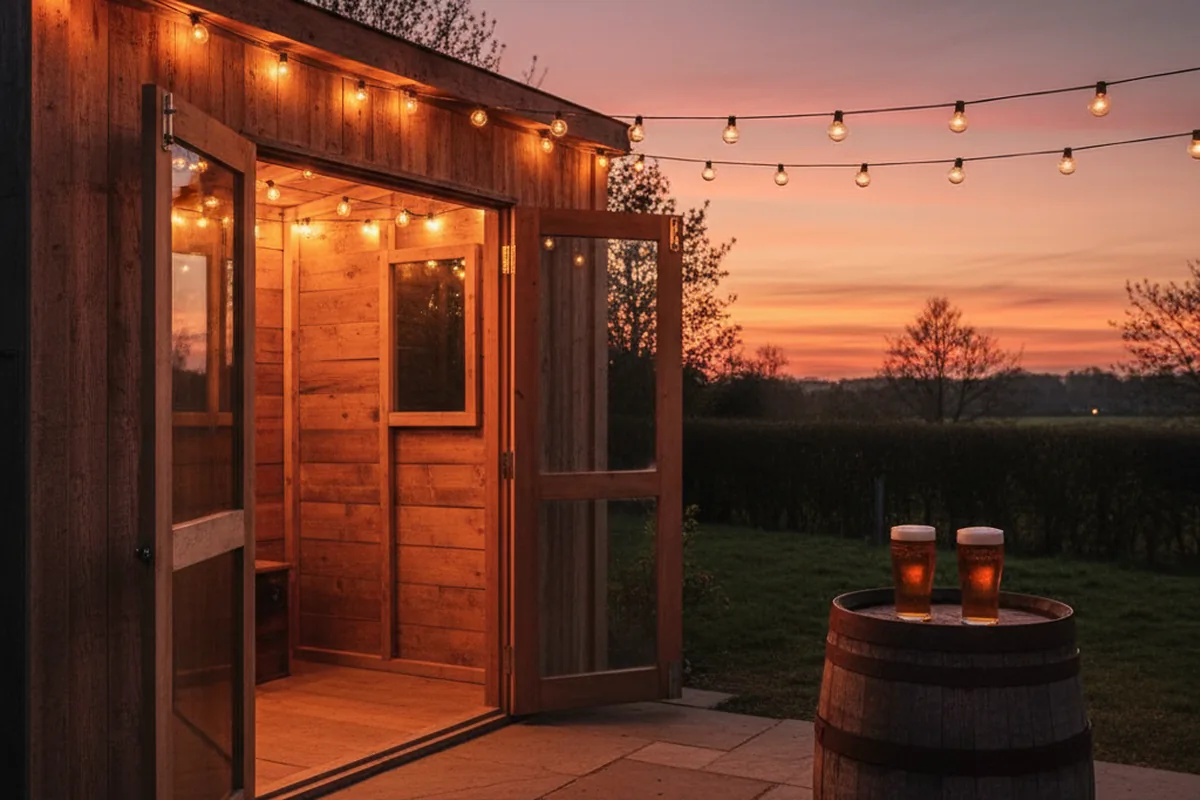
When the weather turns and people spill out into the garden, a pub shed becomes the hub of a proper party. String festoon lights across the bar and out over the outside space and the whole place takes on that warm, golden glow that makes an evening feel special.
Set up barrel tables outside for drinks and elbows, and the crowd flows naturally between the bar and the garden. Keep the inside tidy and warm so it stays the comfortable retreat when the night cools off, and lay on a few bar snacks to soak up the ale. A little thought about where people stand, where the drinks live and where the bins go keeps a party running smoothly long into the night.
Themes and Atmosphere
This is where you stamp your own personality on the place. The theme you pick sets the mood, and half the fun is in the details. A few of the favourites:
- Country pub with timber cladding, warm lighting, horse brasses and a log-effect heater for that cosy snug feel.
- Sports bar with team colours, framed shirts, neon signs and the big screen front and centre.
- Speakeasy with dark walls, low lighting, a back bar full of spirits and a hint of the 1920s.
- Tiki bar with bamboo, bright shirts, rum and a riot of colour for those who like their evenings tropical.
Whatever you go for, the small touches do the heavy lifting: a hanging pub sign with your bar's name, the right lighting, a stack of beer mats, a few framed prints and a dartboard on the wall. Add them slowly and let the place build its own character over time.
Looking After It
A pub shed is an investment in good times, so look after it and it will look after you. The biggest enemy is damp. Make sure there is some controlled ventilation, a trickle vent or the habit of cracking a window, so the moist air from drinkers, the heater and any spills can escape rather than settling on cold surfaces. Our guide to stopping shed condensation goes into the detail.
Keep the timber in good order too. Treat the cladding and any exposed woodwork regularly so it shrugs off the weather and does not rot or fade. Our timber treatment guide covers what to use and how often.
Finally, lock it up. A pub shed full of a telly, a fridge, spirits and kit is a tempting target, so fit a good hasp and padlock or a proper deadlock, and consider a light on a sensor. A little security means you can enjoy your local in peace.
Frequently Asked Questions
Do I need planning permission for a pub shed?
Most pub sheds fall under permitted development if they stay within the usual size and height limits and are not used as living accommodation. The trouble starts if you sell alcohol or charge entry, which needs a premises licence. If you are near a boundary, in a conservation area or over the limits, check with your local planning department first. Our planning permission guide has the full picture.
How big should a pub shed be?
A cosy two-stool bar fits in about 2.4 metres. For a proper bar with room for mates around it, aim for roughly 4 metres by 3 metres. If you want a games area with a dartboard or a pool table, go for around 5 metres by 4 metres.
Can I run beer pumps in a pub shed?
Yes. Plenty of home pubs run a keg, a CO2 line and a pump or font fed from an under counter cooler. You will need power, a cooler that keeps the beer in good condition and a little space behind the bar for the keg. Bottles and cans on a fridge are the simpler route if you do not fancy the upkeep.
How do I stop my pub shed getting damp?
Insulate it properly with a vapour control layer to the warm inside face, keep some controlled ventilation so warm, moist air can escape, and make sure the roof and cladding shed water. A small heater run on cold days also keeps surfaces above the temperature where condensation forms.
What height should a pub shed bar be?
A bar top of around 1050mm suits standing drinkers and bar stools, which usually sit at roughly 750mm to 800mm. Keep the back bar worktop at a comfortable working height and leave enough room behind to move and pour without knocking elbows.
Can I legally charge people for drinks in my pub shed?
No, not without a licence. Selling alcohol or charging for entry turns a private garden bar into a licensed premises, which needs a premises licence and a personal licence holder. Keep it for friends and family with no money changing hands and you stay on the right side of the law.
Ready to Build Your Own Local?
Design your pub shed and garden bar with our free builder tool. Pick the size, the cladding and the layout, and get a complete materials list to match. Or browse our pub shed range for ideas.
Start Building Now