Shed Planning Permission in the UK: What You Need to Know
Do you need planning permission for a garden shed? A clear UK guide to permitted development limits, building regulations, designated land and listed buildings.
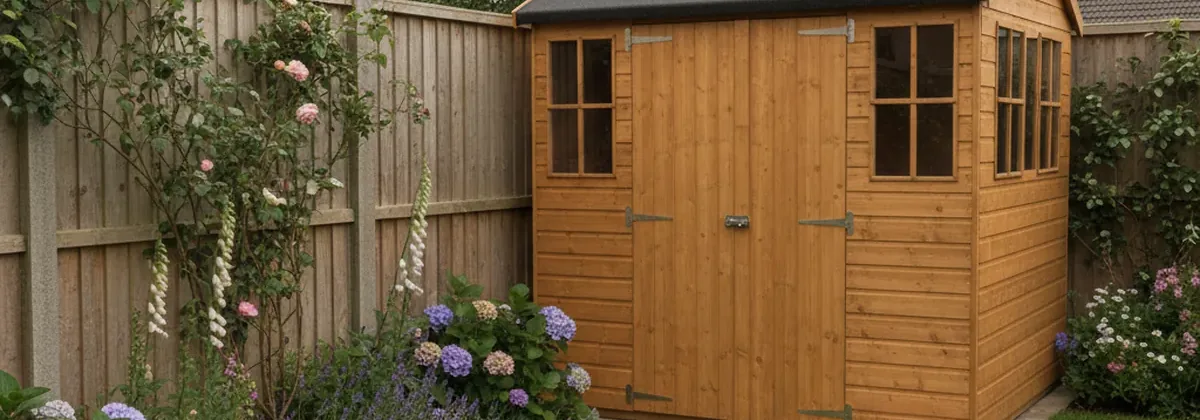
For the vast majority of garden sheds in the UK, the good news is simple: you will not need to apply for planning permission at all. Most sheds fall under what is called permitted development, a set of national rules that lets you build without a formal application. The catch is that permitted development comes with conditions, and if your shed breaks any one of them, you could need permission after all. This guide walks through the rules in plain English so you can build with confidence.
The detailed figures below apply to England. Scotland, Wales and Northern Ireland each have their own permitted development rules, and the limits differ. Wherever you live, always confirm the current position with your own local planning authority before you start.
This article is general guidance to help you understand the system, not legal advice. Rules change and individual sites can have restrictions that are not obvious, so a quick check with the experts at your council is always time well spent.
What Permitted Development Means
Permitted development rights are a national grant of planning permission given automatically by the government. They allow certain types of building work to go ahead without you having to submit and pay for a planning application. Garden sheds, summerhouses, greenhouses, garages and similar outbuildings are usually covered.
Crucially, permitted development is conditional. The rights only apply if your project stays within a defined set of limits. Meet every condition and you can build straight away. Break a single one, and you lose the automatic right, meaning you would then need to apply for planning permission like any other development.
It is also worth knowing that permitted development rights attach to houses, not flats or maisonettes. If you live in a flat, you do not have these rights for outbuildings and should always check with your council. In some areas, rights can also be removed by an Article 4 direction or by a planning condition placed on a newer property, which is another reason to check before you build.
If you want certainty, you can apply to your council for a Lawful Development Certificate. It is not planning permission, but it formally confirms your shed is permitted development. That paperwork can be very useful when you come to sell the house.
The Key England Limits for Outbuildings
To stay within permitted development in England, your shed must meet all of the following conditions. These are the rules that matter most for a typical garden shed.
| Condition | The Limit |
|---|---|
| Position | Not forward of the principal elevation (the front) of the house |
| Storeys | Single storey only |
| Eaves height | Maximum 2.5m |
| Overall height (apex roof) | Maximum 4m for a dual-pitched roof |
| Overall height (any other roof) | Maximum 3m |
| Within 2m of a boundary | Maximum overall height limited to 2.5m |
| Total coverage | Outbuildings and other structures must not cover more than 50% of the land around the original house |
| Use | Incidental to the enjoyment of the house, not living accommodation or sleeping |
Position: behind the front of the house
Your shed must not sit forward of the principal elevation of the original house. In practice that means it goes in your back or side garden, not in the front garden where it would face the road. This is one of the most common ways a shed plan trips up.
Height and how close it is to a boundary
Height is measured to the highest point of the roof. A traditional dual-pitched (apex) roof can reach 4m overall, while a pent or flat roof is capped at 3m. The eaves, the lower edge of the roof, can be no higher than 2.5m in either case. The catch many people miss: if any part of the shed is within 2m of a boundary, the overall height drops to a maximum of 2.5m. If you want a taller workshop, set it back from the fence.
If your shed is within 2m of any boundary, it cannot exceed 2.5m in total height. A standard apex shed pushed up against the fence can quietly break this rule. Either keep it under 2.5m or move it more than 2m away.
The 50% coverage rule
Outbuildings, extensions and other structures together must not cover more than 50% of the land around the original house. The phrase original house means the property as it stood in 1948, or as first built if later, so any extensions you have added count against your allowance. Add up your shed, any existing outbuildings and extensions, and make sure they leave at least half of your garden uncovered.
Use it has to be incidental
The shed must be incidental to the enjoyment of the house. Storage, a workshop, a home office, a hobby room or a home gym are all fine. What is not allowed under permitted development is using it as self-contained living accommodation or for sleeping. The moment a shed becomes a bedroom or annexe, it falls outside these rights.
When You Definitely Need Permission
Some situations almost always require a planning application. If any of these apply to your shed, assume you need to talk to your council before building.
- The shed would sit forward of the principal elevation, for example in the front garden
- It is more than single storey, or the eaves exceed 2.5m
- It is over 4m tall (apex) or over 3m (any other roof)
- It is within 2m of a boundary and taller than 2.5m
- Together with other buildings it would cover more than 50% of the land around the original house
- It will be used for sleeping or as self-contained living accommodation
- Your home is a flat or maisonette rather than a house
- Permitted development rights have been removed by an Article 4 direction or planning condition
If you are unsure, your local planning authority is the definitive source. A short phone call or pre-application enquiry is far cheaper than building first and discovering you need to take it down. Getting the size and layout right at the start also helps. Our guide to choosing the right shed size is a good companion read here.
Building Regulations Are Not the Same as Planning
This is the single biggest source of confusion, so it is worth being clear. Planning permission and building regulations are two separate systems run for different reasons.
| System | What it controls |
|---|---|
| Planning permission | Whether and where you can build, how big, how tall, and the effect on neighbours and the area |
| Building regulations | How the structure is built: stability, fire safety, drainage, insulation and electrical safety |
It is entirely possible to need one and not the other. A typical garden shed often needs neither. Here is the general position on building regulations for a detached outbuilding in England:
- Under 15 square metres of internal floor area with no sleeping accommodation: generally does not need building regulations approval
- Between 15 and 30 square metres: often exempt too, provided it has no sleeping accommodation and is either at least 1m from any boundary or built substantially of non-combustible materials
- Larger buildings, or any building with sleeping accommodation, are more likely to need approval
Even when the shed itself is exempt, any fixed electrical work must meet Part P of the building regulations. It should be done or certified by a competent, registered electrician. Do not be tempted to wire a power supply yourself without the right sign-off.
Designated Land: Tighter Rules
If your home is on what is called designated land, the permitted development limits are reduced. Designated land includes conservation areas, national parks, Areas of Outstanding Natural Beauty and the Broads.
On designated land the rules are stricter in a couple of important ways:
- No outbuildings are permitted to the side of the house
- Outbuildings more than 20m from any wall of the house are limited in size; anything larger than 10 square metres in that zone would need an application
If you think your property might be in a conservation area or one of these protected landscapes, check before you commit to a design. Your council can confirm whether designated land status applies, and the same restrictions can also affect the materials and appearance they will accept.
Listed Buildings
Listed buildings are in a category of their own. If your house is listed, you very likely need listed building consent even for an outbuilding, and this is separate from planning permission. The listing can also extend to the curtilage, meaning structures within the grounds may be protected too.
Carrying out work to a listed building without consent is a criminal offence, so never assume a shed is too minor to matter. Speak to your council's conservation officer before doing anything, even for a modest timber shed.
Common Mistakes and When You Still Need Permission
Most planning problems with sheds come from a handful of avoidable errors. Here are the ones that catch people out most often.
A standard apex shed within 2m of a boundary often exceeds the 2.5m height cap that applies in that zone. Measure to the ridge and either lower the roof or set it back.
The 50% coverage limit includes extensions and any other outbuildings, not just the new shed. Add everything up before you assume you are within the limit.
Sleeping in or living in the shed takes it outside permitted development and usually outside building regulation exemptions too. A garden room used for sleeping is a different proposition entirely.
If you are in a conservation area, national park or AONB, the side-of-house and 20m rules change the picture. Never apply the standard limits without confirming your land status.
The roof shape you choose affects your height allowance, so it is worth understanding the trade-offs. Our comparison of apex versus pent roof sheds explains how each style measures up against these limits.
A quick pre-build checklist
- Confirm your land status - Check whether you are on designated land or in a listed building. If so, contact your council first.
- Check position and height - Make sure the shed is behind the front of the house and within the height limits for its distance from the boundary. Then use the practical shed-placement guide to check drainage, services, tree roots, access and maintenance space.
- Add up coverage - Include all outbuildings and extensions to stay under 50% of the land around the original house.
- Plan the electrics - If you are adding power, line up a registered electrician to meet Part P.
- Consider a certificate - For peace of mind, apply for a Lawful Development Certificate to confirm your shed is lawful.
Frequently Asked Questions
Do I need planning permission for a garden shed?
Usually not. In England a shed is normally permitted development needing no application, as long as it meets every condition: behind the front of the house, single storey, eaves no higher than 2.5m, overall height no more than 4m for an apex roof or 3m for other roofs, capped at 2.5m if within 2m of a boundary, and not covering more than 50% of the land around the original house.
How tall can my shed be without permission?
Up to 4m overall for a dual-pitched (apex) roof or 3m for any other roof, with eaves no higher than 2.5m. If the shed is within 2m of any boundary, the overall height is limited to 2.5m.
Is building regulations approval the same as planning permission?
No. Planning controls whether and where you build; building regulations control how it is built. A detached outbuilding under 15 square metres of internal floor area with no sleeping accommodation generally needs neither. Between 15 and 30 square metres it is often exempt from building regulations too, if it has no sleeping accommodation and is either at least 1m from any boundary or built substantially of non-combustible materials.
Can I sleep or run a business in my shed?
To stay within permitted development the shed must be incidental to the house, so it cannot be self-contained living accommodation or used for sleeping. Light incidental use is fine, but anything that turns it into a dwelling or a significant business premises may need permission.
What if my house is listed or in a conservation area?
Stricter rules apply. On designated land there are no outbuildings to the side and limits on those more than 20m from the house. For a listed building you very likely need listed building consent even for a shed. Always check with your local planning authority first.
Summary
Most UK garden sheds can be built without planning permission, but only if they stay inside the permitted development limits. Before you build, remember to:
- Keep it behind the front of the house and to a single storey
- Watch the height, especially the 2.5m cap within 2m of a boundary
- Stay under 50% coverage including all other structures
- Treat building regulations separately and get electrics certified
- Check designated land and listed status and confirm everything with your council
Get those right and your shed should be straightforward to put up. When in doubt, a quick word with your local planning authority is always the safest move.
Design Your Perfect Shed
Use our free shed builder tool to set your dimensions and roof style, so you can plan a shed that stays comfortably within the permitted development limits.
Start Building Now