Shed Safety for Families: Fire Risks and Child Safety in the Garden
The shed is the garden's hazard cupboard: fuel, chemicals, blades and batteries a few feet from where children play. The real fire risks (including e-bike charging), how to childproof a shed properly, and a checklist for grandparents' gardens.
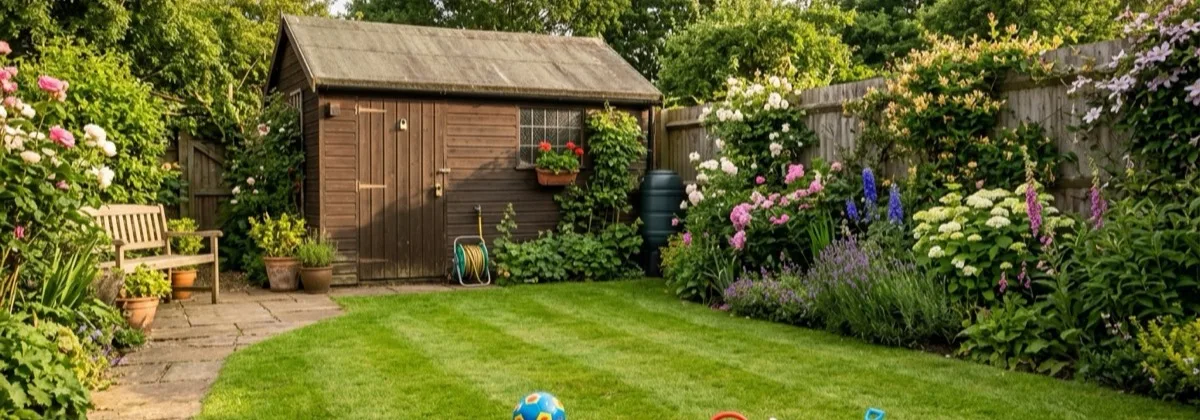
Think about what a shed actually is: petrol, blades, poisons, ladders and increasingly a charging lithium battery, in a timber box a few steps from a trampoline. Families think about this more than anyone admits, usually in a quiet flash of unease watching a toddler head down the garden, and then nothing gets done because nobody talks about it and there is no decent guide to follow. This is that guide: what genuinely starts shed fires, what actually hurts children in gardens, and the short list of fixes, most of them free, that turn the shed back into the most useful building you own.
The Garden Is Not as Safe as It Feels
The Royal Society for the Prevention of Accidents (RoSPA) puts garden injuries in the UK at around 300,000 a year needing hospital treatment, over 100,000 of them children. The lawnmower tops the tool casualty list (most often during blade cleaning, not mowing), and the poisoning risk to small children comes overwhelmingly from ordinary shed stock: slug pellets, weedkiller, white spirit, creosote substitutes.
On the fire side, the growth story is lithium. London Fire Brigade alone attends an e-bike or e-scooter battery fire roughly every two days, and a steady share of the national incidents are sheds and outbuildings, because that is where the bikes charge. A failing lithium pack does not smoulder politely: it jets flame, and in a timber shed full of fuel and finishes the building is typically lost in minutes.
None of this argues against sheds. It argues for treating the shed like what it is: the garden's hazard cupboard, which just needs a cupboard's discipline: shut, locked, organised.
What Actually Starts Shed Fires
- Lithium batteries on charge. The modern number one: e-bikes, e-scooters, power tool packs, especially cheap replacement batteries and chargers bought online. Damaged, swollen or non-genuine packs are the classic precursors.
- Improvised electrics. Daisy-chained extension leads through a window, perished cable, sockets rigged without RCD protection. A shed with real electrical demand deserves a real supply: see our shed electrics guide.
- Heaters. Fan heaters near sawdust, anything draped over an element, and portable gas in an enclosed timber box. The safe options, tube and oil-filled heaters on thermostats, are covered in the winter shed guide.
- Fuel and vapour. Petrol for the mower, stored generously and capped loosely. Vapour in a hot shed finds ignition sources you forgot existed. Store the minimum, in proper approved containers, and fill the mower outdoors, never over the shed floor.
- Hot ash and disposable barbecues, binned or leaned against the shed while still alive.
- Sunlight through glass. Rare but real: a glass jar or mirror on a windowsill focusing summer sun onto something dry. Heat in general makes every other risk worse; the summer shed guide covers what a 50°C shed does to aerosols and batteries.
Charging E-Bikes in the Shed, Safely
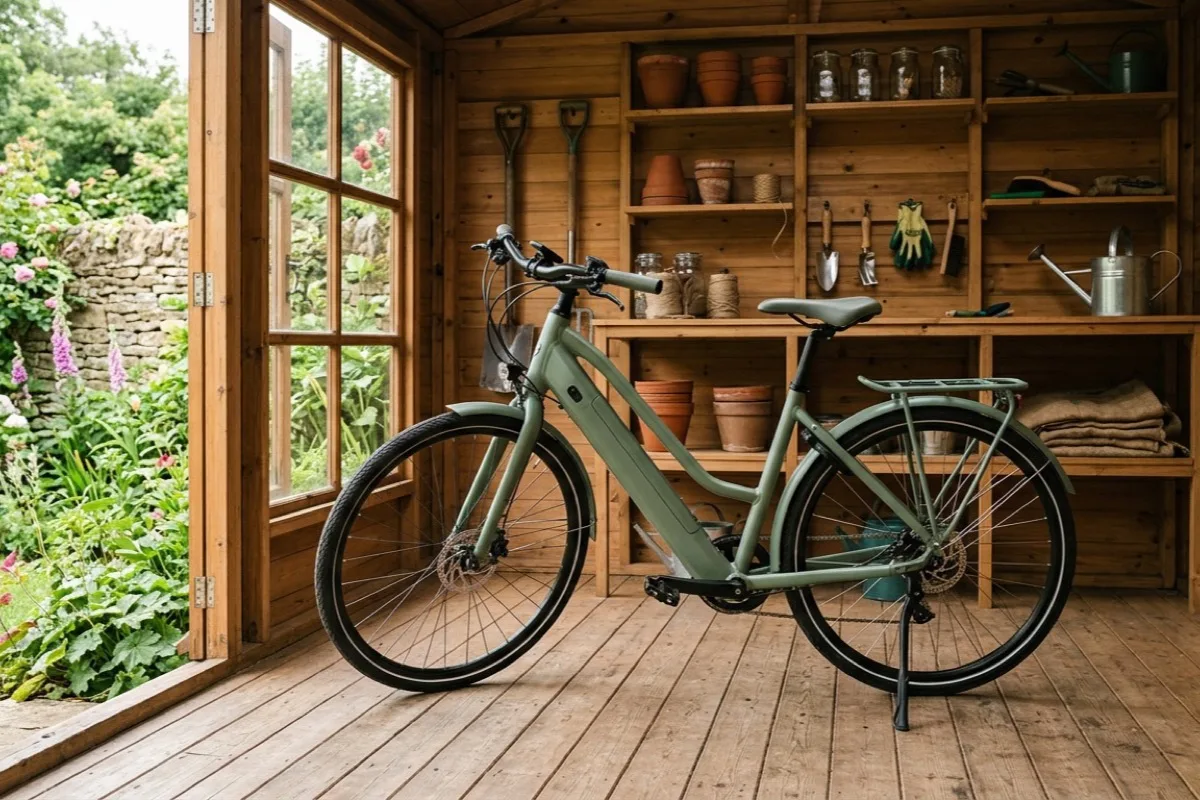
Here is the nuance most coverage misses: fire services would rather your e-bike charged in an outbuilding than in your hallway, because a battery fire in the home blocks escape routes and takes the house. Moving the risk to the shed is genuinely sensible; the job is to stop the shed becoming the sacrifice.
- Genuine battery, genuine charger, from a reputable seller. Most catastrophic failures trace back to cheap replacements and mismatched chargers.
- Charge attended, not overnight. Put it on charge when you are pottering, take it off when done. Overnight charging in any building is the pattern in most serious incidents.
- Clear a metre. Nothing combustible against or above the bike: no fuel can on the next shelf, no jackets hung over the bars.
- Stop on symptoms. Swelling, heat, smell, or a battery that has been dropped or soaked: stop using it and have it checked. A failing pack gives warnings; take them.
- Alarm overhead (next section), so a fire at 2pm while you are at work is a shed lost, not a mystery until the fence goes up too.
- Winter note: never charge a frozen battery; let it warm indoors first. Battery care through the seasons is covered in the bike storage guide.
The Fire Prevention Kit: Under £50
- A heat alarm rather than a smoke alarm for dusty workshops (fewer false alarms), ideally a wireless interlinked model with a paired sounder in the house, so the shed can wake you.
- A small dry powder or water mist extinguisher by the door, on the escape side, for the calm early second of a small fire, never for a battery in full flow: if a lithium pack is jetting, get out and call 999.
- Distance discipline. When siting a new shed, remember fire thinks in gaps: space from the house, fences and the neighbour's shed slows spread. Something to set right at the design stage in the builder.
- An annual five minutes: check cables for perishing, clear the sawdust from around anything electrical, and cull the aerosol shelf. It slots naturally into the annual maintenance checklist.
Worth knowing: a shed fire is a standard insurance peril, but the payout meets the same limits and conditions as any other claim; our shed insurance guide explains what insurers expect.
Childproofing the Shed
One principle does nearly all the work: the shed is locked whenever an adult is not in it, with the key out of reach rather than sitting in the padlock. RoSPA's advice comes down to the same point: a locked shed is the safe place for everything else. From there:
- Blades high. Saws, shears, secateurs and chisels hang on wall racks above child height, points down, never loose on the bench at toddler level.
- The mower rule. The tool that tops the casualty tables gets respect: children well clear when it runs, spark plug or battery out before any blade cleaning, and stored with the blade side inaccessible.
- Power tools disarmed. Batteries out and stored separately; for mains tools, a lockable box or simply the locked shed itself.
- Ladders flat and low, not leaning where a climber can find them.
- Windows and fingers. If small children play near the shed, safety film on single-glazed shed windows is pennies, and a simple door restrictor stops the classic slammed-finger injury. Fitting and glazing options are in the windows and doors guide.
- Give them their own. The most durable fix: a child-height shelf or box of their garden things, sand toys, child trowel, watering can, kept OUTSIDE the shed, so there is never a reason to follow you in.
Chemicals: the Quiet One
The garden chemicals shelf is the most dangerous half-metre in most gardens, and the danger is concentrated in one habit: decanting. Weedkiller in an old drinks bottle is how children get poisoned; to a three-year-old, a bottle's shape means drink. So:
- Original containers, always, with the child-resistant caps done up properly.
- Up high and locked: the top shelf of a locked shed, or better, a locked cabinet inside it. Slug pellets, rodent bait, weedkiller, white spirit and wood treatments are the priority list.
- Buy small. The 5-litre bargain bottle spends a decade being a hazard; the small bottle gets used up and gone.
- Dispose properly: councils take garden chemicals at household waste sites; the drain does not.
- Timber treatments too: keep drying-day restrictions in mind, and keep children and pets off freshly treated timber until fully dry, as covered in the treatment guide.
The Grandparents' Garden Checklist
The highest-risk garden for a small child is often not home, where everything has slowly been childproofed, but a grandparent's: a garden that has not had a child in it for thirty years, with a shed organised for convenience rather than curiosity. Before the grandchildren visit, a Sunday-afternoon pass (and for the garden-wide version with a free printable PDF, see the full Grandparents' Garden Checklist):
1. Shed locked, key out of the door and out of reach. 2. Chemicals off the floor and low shelves, original containers, nothing decanted. 3. Slug pellets and rodent bait accounted for, including any scattered outdoors. 4. Blades and hand tools hung high, not benched. 5. Mower immobilised. 6. Ladder flat. 7. Petrol can capped, minimal, high. 8. Water butts covered (a butt is deep enough to matter). 9. Old fridges, freezers or trunks in outbuildings lockable-proofed or removed. 10. Anything mid-project, open paint, plugged-in tools, made safe before they arrive, not after.
Item 10 is the one that catches careful people: the danger window is the interrupted job, the strimmer left plugged in while the kettle goes on. The habit that closes it is beautifully simple: the shed gets locked at every break, not just at the end of the day.
Frequently Asked Questions
Is it safe to charge an e-bike in a shed?
Safer than in the house, and fire services point people that way. Use the genuine charger, charge attended rather than overnight, keep a metre clear of anything combustible, stop on any battery symptoms, and fit an alarm.
How do I childproof a garden shed?
Lock it every time with the key out of reach, chemicals up high in original containers, blades hung above child height, mower and power tools immobilised, ladders flat. The lock does most of the work.
What should not be stored in a garden shed?
Large quantities of petrol, damaged lithium batteries, and any chemical in an unlabelled or drinks-style container. Decanting into old bottles is the most dangerous habit in British gardens.
Do I need a smoke alarm in my shed?
If it has power, charges batteries or stores fuel, yes: a heat alarm suits a dusty shed best, interlinked to a sounder in the house so it can actually wake someone.
Designing a Family-Safe Shed?
Plan the lockable doors, the right windows and a safe layout from the start. Design your shed free and get the complete materials list.
Start Building Now