Beyond Storage: 21 Hobby Shed Ideas for Your Own Garden Escape
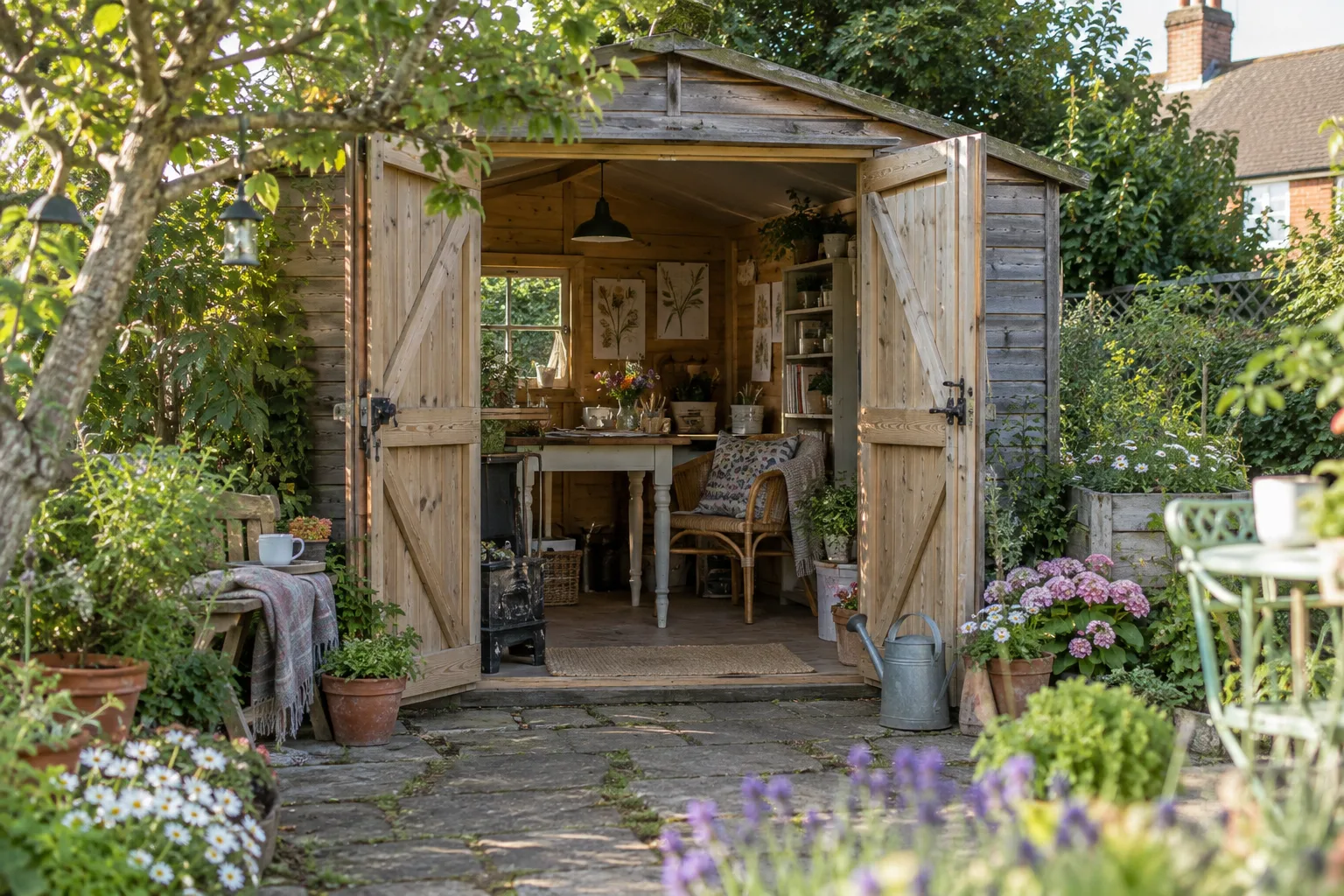
A little railway. A half-finished painting. A favourite chair. Find a reason to make the garden shed your favourite place to spend an afternoon.
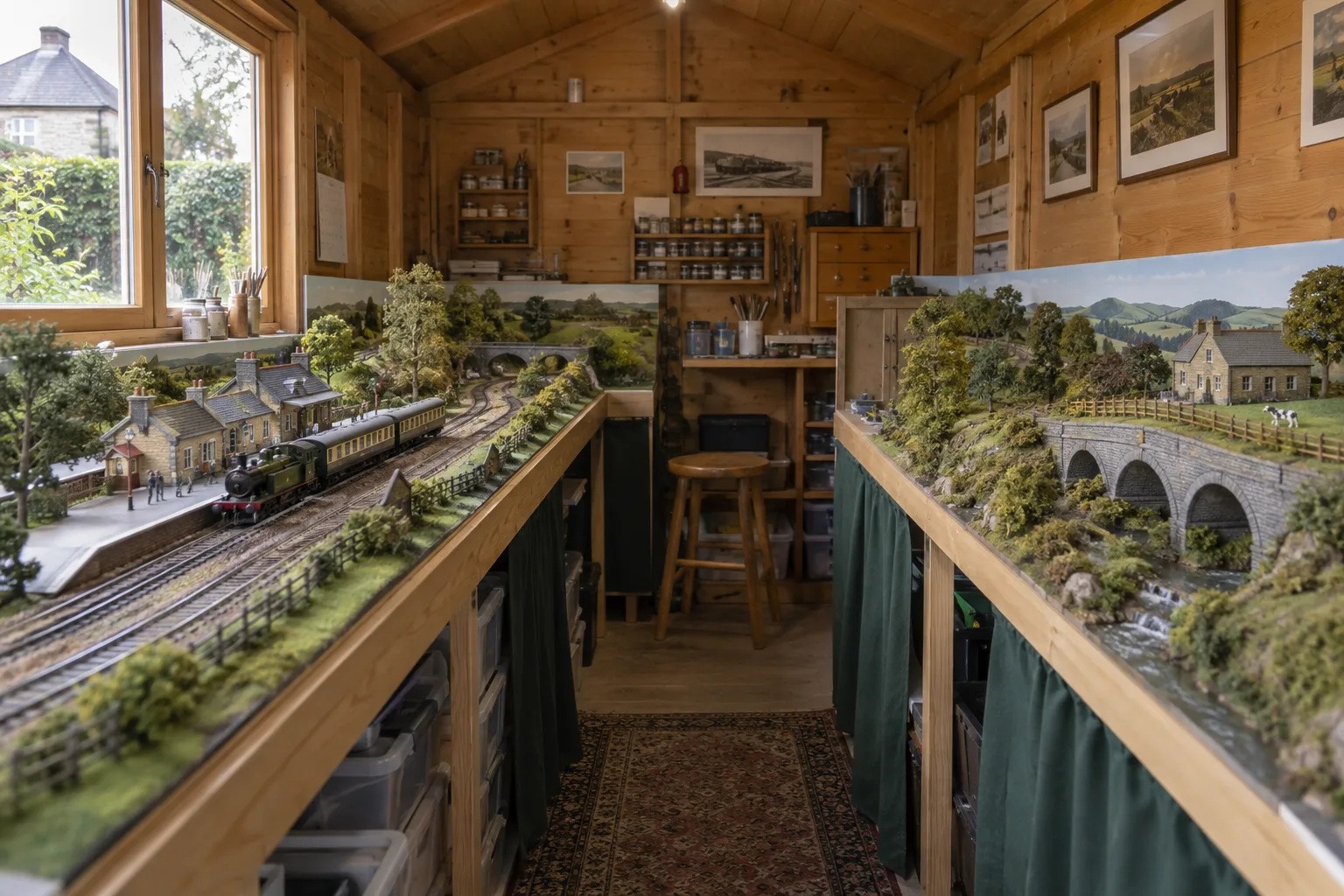
A little train rounds a bend, passes a village station and disappears behind a hill. Outside, it is an ordinary back garden. Inside the shed, someone has made a whole other world.
That is the appeal of a hobby shed. It might hold a railway, an easel, a well-loved sewing machine or simply the chair where you finally finish a book. The important part is having somewhere to return to an activity you enjoy, without clearing everything away for dinner.
You do not need to turn the garden into a luxury retreat. A modest space with one clear purpose can be more inviting than a room full of equipment you rarely use. Start with the afternoon you would like to spend there, and let that shape the idea.
Here are 21 possibilities, from hobbies that fit on a small table to projects that could happily take over the whole shed. These are ideas to adapt, not promises that every activity will suit every building.
What would you like your shed to feel like?
If several ideas appeal, choose one as the main activity and another that uses the same furniture. Writing and reading make easy companions. Sewing and board games can share a clear table. Clay work and a treasured paper collection are a less comfortable pairing.
Make something you can come back to
1. A model railway room
A railway shed can become a place you know as well as your own street. Perhaps it is a seaside terminus remembered from childhood, a busy goods yard or a completely invented village. You can spend one afternoon running trains and the next making a tiny allotment beside the tracks. The joy is that it can grow slowly, with each small detail giving you another reason to open the door.
A layout around the walls can leave a working space in the centre; a short end-to-end layout offers a different sort of pleasure from a continuous circuit. Plan for reaching the tracks and entering the room, and check the minimum curve requirements for your chosen trains before committing to a baseboard.
Try it first: sketch one station or siding you would love to model, rather than designing an entire railway at once.
2. A model-making workshop
Ships, aircraft, architectural models and little street scenes all reward patient attention. A dedicated table means you can leave a half-finished project exactly where you stopped, with its tiny parts arranged in trays. It is an appealing use for a narrow shed because the world you are creating can be much smaller than the room around it.
Give the current project the best position and put completed pieces on display, rather than allowing unopened kits to claim every surface. Follow the product instructions for paints and adhesives, especially ventilation requirements.
Try it first: finish one small kit on a portable tray before planning a permanent workshop.
3. An artist’s studio
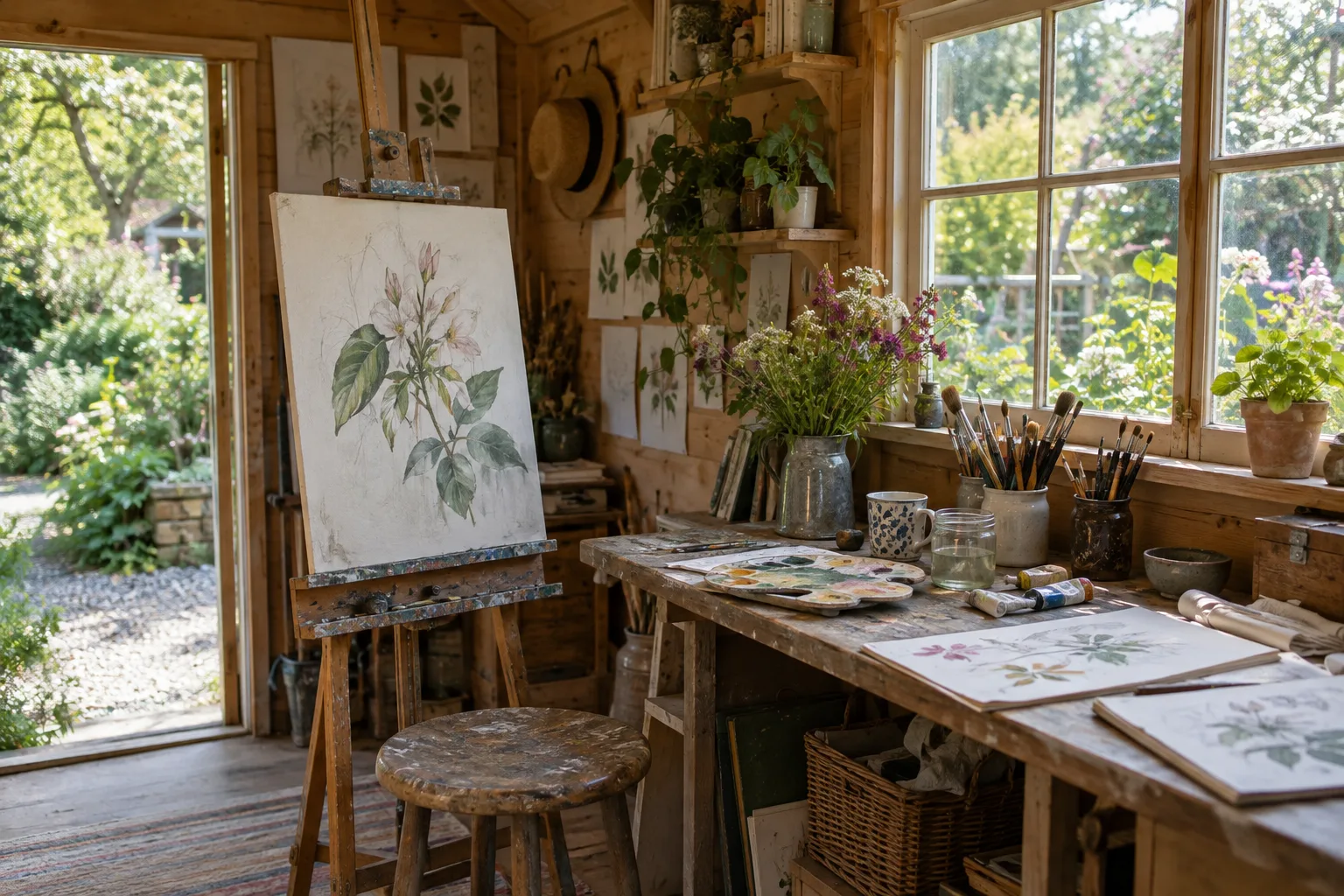
There is something inviting about an easel waiting beside a window. You could paint the same garden through the seasons, fill sketchbooks with everyday objects or finally try the watercolours that have been sitting in a drawer. A shed studio need not resemble a gallery: paint marks, a few experiments pinned up and a comfortable working chair give it character.
Think about where the light falls at the time you actually paint. Keep one surface available for looking at your work from a little distance, rather than filling every wall immediately.
Try it first: bring out a sketchbook and draw the view from the doorway on three different days.
4. A sewing and textile room
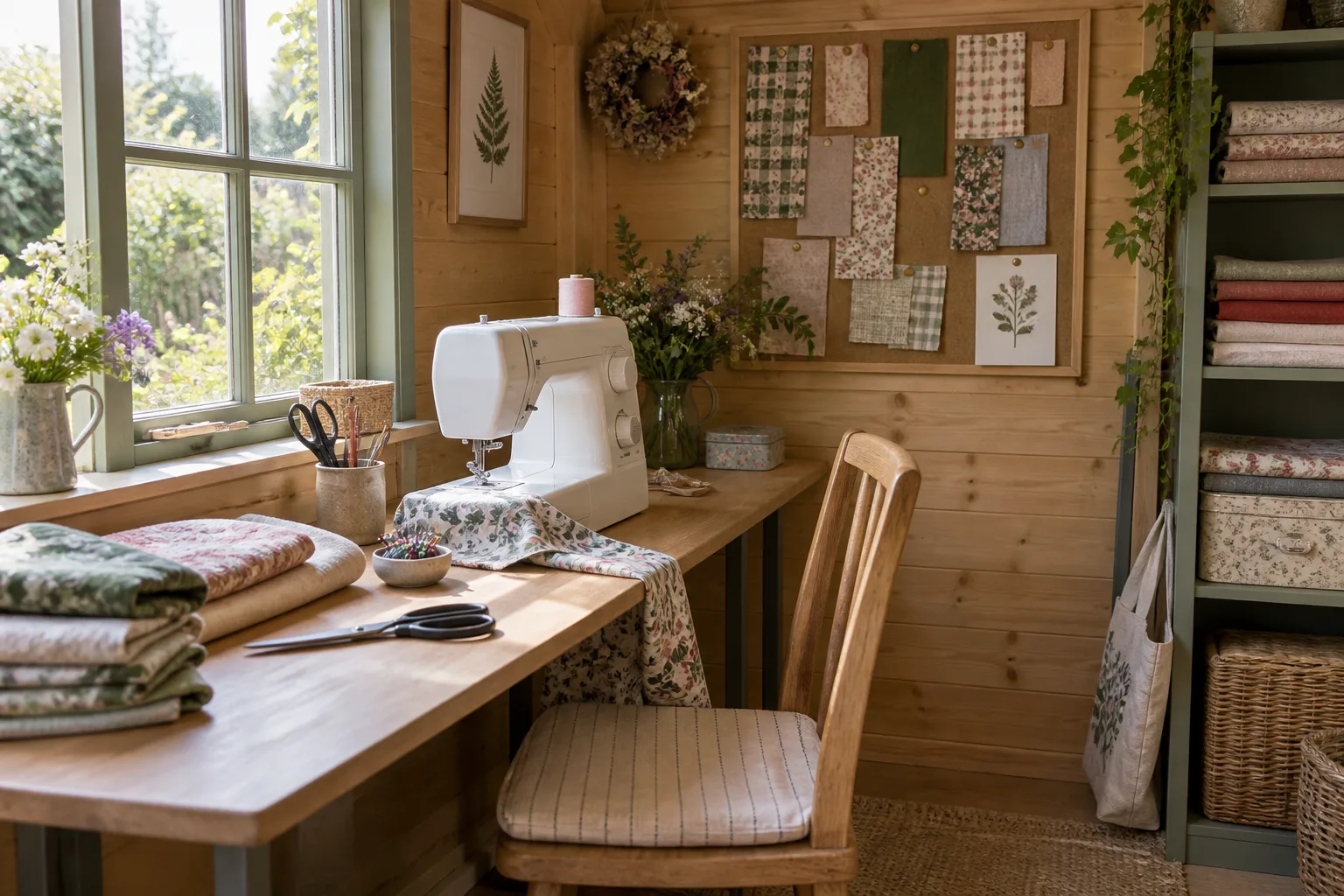
A sewing shed is a place where the machine can stay threaded and the fabric can stay out. You might make clothes, patchwork cushions or useful repairs that turn into more ambitious projects. A board of fabric samples can make the room feel personal without demanding much space.
Remember that cutting fabric and sewing it are different tasks. A fold-away cutting surface may work better than an oversized permanent table. Keep fabric and the machine in conditions suited to them; a damp storage shed is not ready to become a textile room just because a desk fits.
Try it first: make a simple project from fabric you already own and note how much table space you use.
5. A small clay and pottery corner
Hand-building a little pot or a textured tile offers a satisfying change from looking at a screen. A clay corner can focus on shaping a few pieces slowly, with a shelf where you can see the work develop. You do not have to begin with a wheel or make the shed into a firing studio.
For ceramic clay, talk to a local pottery studio about suitable materials and firing before you make work for their kiln. Keep clay dust controlled with appropriate wet cleaning; a kiln is a separate specialist installation, not an assumed part of this idea.
Try it first: take a hand-building class and find out which parts of the process you enjoy most.
6. Jewellery and beadwork
Beadwork, wire wrapping and simple jewellery assembly can bring plenty of variety to a compact desk. One day might be about choosing colours, another about making a gift for someone particular. Small labelled compartments let the materials become a pleasing collection rather than a jumble.
A tray with a raised edge helps keep tiny components together when you pause. This idea is about assembly and hand tools; soldering, casting and other hot processes need their own suitable arrangements.
Try it first: create a bracelet or pair of earrings using a deliberately limited palette.
7. Paper crafts and bookbinding
Cards, paper cutting, collage and simple stitched notebooks can all begin at the same table. A shed gives you somewhere to spread out colours and textures, compare combinations and leave a composition unfinished until the next visit. It can be particularly enjoyable when the materials have a history: old maps, wrapping paper or copies of family photographs.
Store paper flat and dry, with precious originals kept somewhere suitably protected. A small selection of materials within reach is often more useful than shelves packed with every possible supply.
Try it first: make a small notebook for recording what you do in the shed.
Give yourself somewhere quiet to go
8. A reading retreat
A chair, a book and a view of the garden can be enough. The pleasure is partly the small journey: leaving the house, crossing the grass and settling somewhere associated with reading rather than chores. You could keep a short shelf of books you are excited to start, with space for a visitor’s recommendation.
Choose the chair by sitting in it for a while, not by how it looks in a photograph. If the shed is only comfortable in mild weather, let this be a seasonal pleasure and bring vulnerable books indoors between visits.
Try it first: spend half an hour reading there before buying any furniture.
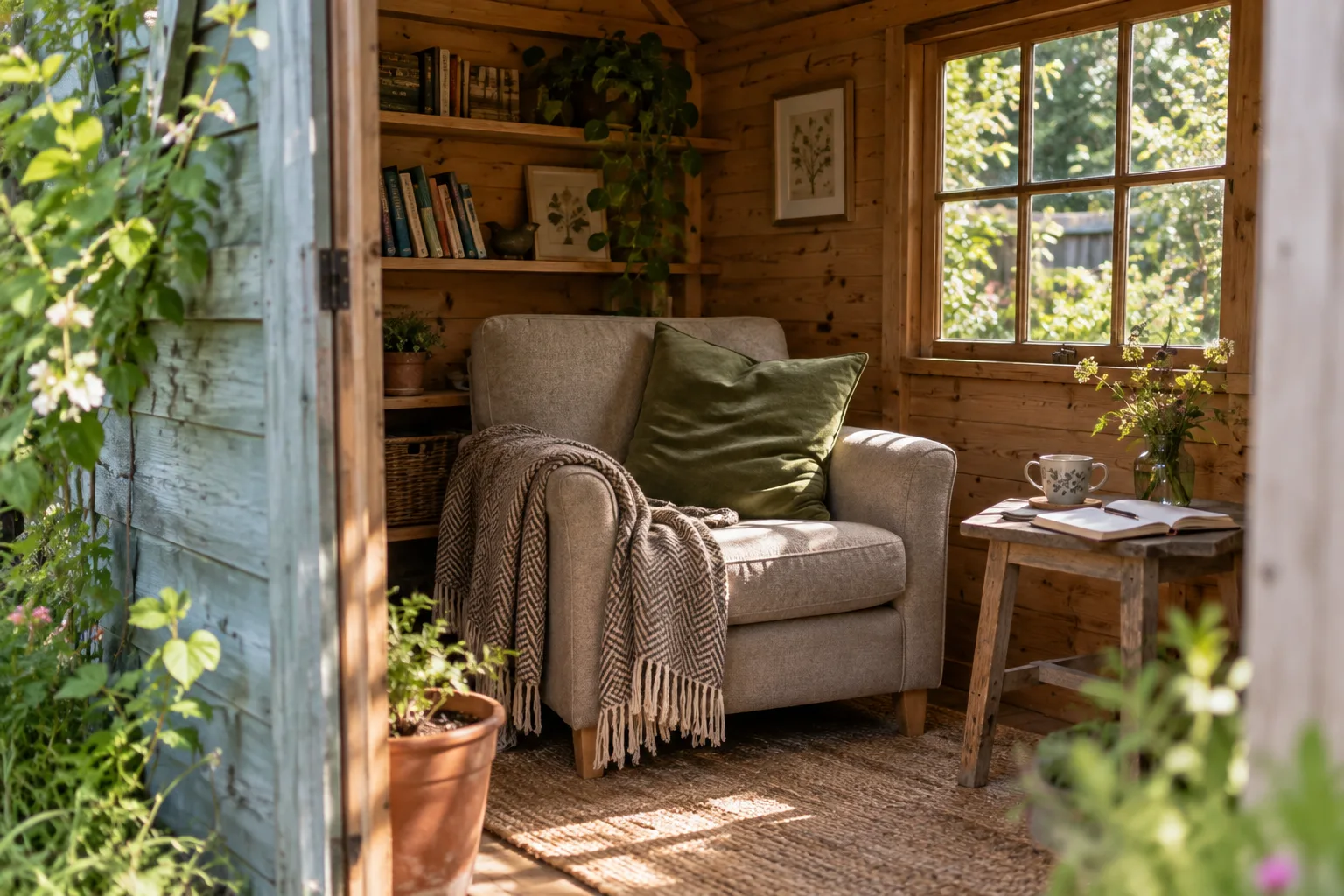
9. A writing room
Perhaps there is a short story you keep thinking about, a family history to capture or a notebook that deserves more than hurried lists. A writing shed gives that work a place. A modest desk facing the wall can be as useful as a picturesque garden view if you prefer fewer distractions.
The room does not have to be completely cut off from everyday life. A regular hour and a clear tabletop may matter more than an elaborate setup. Our garden office guide explores the space if your writing becomes a more regular desk-based routine.
Try it first: write one page about a favourite place, with your phone left in the house.
10. A puzzle room
A jigsaw can occupy a dining table for days, which makes it a natural candidate for its own corner. In the shed, you can leave the difficult sky section alone and return later with fresh eyes. Crosswords, logic puzzles and solo tabletop challenges can live alongside it in a small drawer.
Use a board or cover that lets you protect the work between sessions. Make sure you can reach the middle without leaning awkwardly across the whole table. The best arrangement is the one that makes ten spare minutes feel worth using.
Try it first: start with a puzzle that fits on a moveable board.
11. A music-listening nook
Choose an album, put the phone down and listen all the way through. A shed can make that simple ritual feel like an occasion, whether you prefer headphones or quiet speakers. A notebook of discoveries, a comfortable seat and a handful of favourite recordings are enough to give the space its identity.
Ordinary shed walls do little to contain sound, so keep neighbours in mind. Records and equipment also need suitable storage conditions; take them indoors if the building gets damp or experiences temperatures outside the equipment’s guidance.
Try it first: listen to a favourite album on headphones without doing another task at the same time.
12. A garden-observation hideaway
Watch which birds visit, sketch the changing border or keep a record of the first blossom. This hobby makes the garden itself the subject, with the shed offering a place to sit quietly. A notebook and a useful view can matter more than any specialist equipment.
Choose a position where you can observe without disturbing wildlife. It may work better with the door open than through a reflective window. Over time, notes about weather, visitors and plants become a very personal account of the space outside.
Try it first: record what you notice during the same fifteen-minute period on several mornings.
Make room for the things that fascinate you
13. Miniature painting and tabletop scenery
A tiny cottage, a fantasy landscape or a carefully painted figure can absorb an entire happy afternoon. This is different from needing a full gaming table: the hobby can centre on making and painting, with finished scenes displayed on a shelf. A shallow tray keeps the current project together.
Leave yourself room to rest your arms comfortably and see small details clearly. Check the instructions for the materials you use; spray painting and airbrushing are not interchangeable with a simple brush-and-palette setup.
Try it first: paint one figure or make one small scenery piece before starting a whole collection.
14. A collection and display room
Vintage toys, football programmes, postcards or railway memorabilia can tell a story when they have space around them. A hobby shed could hold a changing display rather than every item you own. Arranging a small selection by a place, year or theme becomes an enjoyable activity in itself.
Consider using copies of fragile paper pieces and keeping valuable originals in more suitable conditions. Daylight, moisture and security all matter to a collection. Our shed security guide is a useful next read if the contents will have value beyond their sentimental importance.
Try it first: curate five objects and write a short label explaining why each one matters to you.
15. A tabletop photography studio
You do not need a huge studio to enjoy photographing small things. Flowers from the garden, a handmade object or a carefully arranged still life can become an absorbing project beside a window. A simple background lets you explore composition and light without leaving home.
Keep enough space to step back and change the camera angle. The shed can be the place where you make pictures while cameras, batteries and prints return indoors afterwards. You can also combine this corner with another hobby by photographing the models or crafts you finish.
Try it first: photograph one object three ways using the same window light.
Share a hobby, not just the space
16. A board-game room
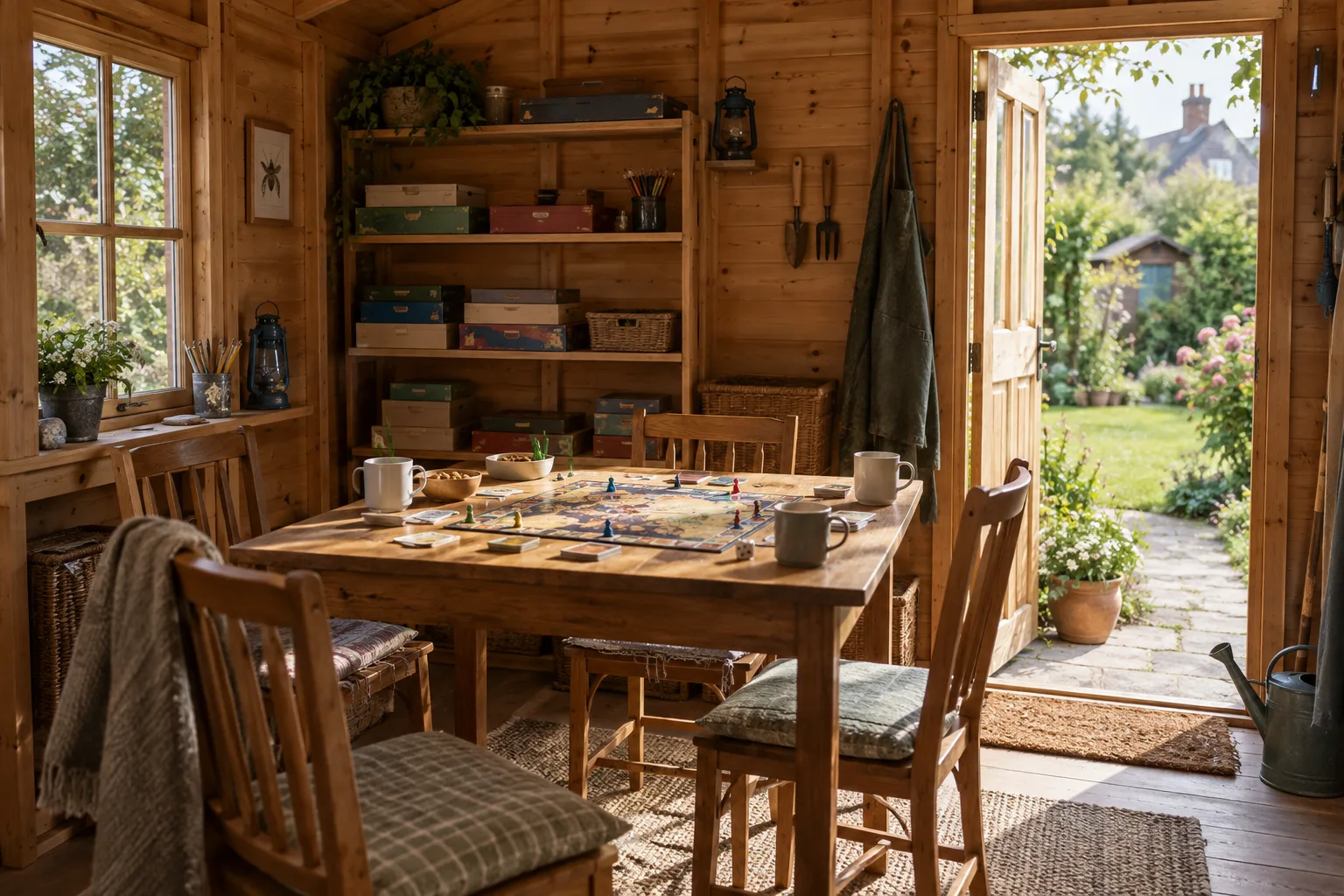
A table set for a game is a lovely invitation. The shed can become the place for a weekly two-player contest, a family afternoon or a longer game that continues next time. It need not become a pub or an entertainment room with every possible feature.
Allow room for people to pull their chairs out and move around the table. A compact game with two players is a different space commitment from six people leaning over a sprawling board. Put the people into your layout before adding shelves for boxes.
Try it first: bring out a familiar game and see whether everyone can sit and move comfortably.
17. A darts corner
A few rounds of darts can turn an ordinary evening into a friendly ritual. Keep a scorebook, invent a household league or enjoy practising alone. It suits a room where there is a clear stretch of space, rather than one already packed with desks and storage.
Check the correct playing dimensions for your board and leave the throwing area clear of doors and passing people. The board needs a suitable secure mounting and protection behind it. A small shed may simply not have a sensible layout for this particular hobby.
Try it first: mark out the complete playing area before choosing where a board could go.
18. A shared family craft space
Paint a cardboard village, make seasonal decorations or work on separate projects at the same table. A shared craft shed can be somewhere different generations spend time together without needing to enjoy exactly the same hobby. Give everyone a small place for their own work so that returning feels personal.
Keep activities suitable for those taking part and separate craft materials from garden chemicals and tools. Our family shed guide covers the practical side; the enjoyable part here is making something together at your own pace.
Try it first: choose one project you can complete together in an afternoon.
Let the garden become part of the hobby
19. A seed-sowing and garden-journal station
Sort seed packets, plan next year’s border and label the pots while the garden is right outside. The shed can be the organising heart of a growing hobby, with a workbench and a notebook full of experiments. It is especially satisfying to return later and compare what you hoped would happen with what actually grew.
A shed is not automatically a greenhouse. Move seedlings to conditions appropriate for the plants, rather than assuming the bench offers enough light or warmth. Keep this corner about preparing, observing and planning as much as growing.
Try it first: choose one plant to grow and keep a short illustrated record of its progress.
20. A bonsai working corner
Bonsai can make you look closely at shape, proportion and seasonal change. A shed bench offers somewhere to organise tools, study a tree and plan the work, with the garden providing its wider setting. It is a hobby that lends itself to patient observation rather than filling the space quickly.
The shed should not be treated as a permanent home for every tree. Bonsai need conditions suited to their species, and many are outdoor plants. The RHS bonsai guide explains the distinction between indoor and outdoor growing.
Try it first: learn about one suitable species before starting a collection.
21. Flower arranging and botanical crafts
A bucket of garden stems and a few simple vessels can turn a shed table into a wonderfully seasonal workspace. Try a loose arrangement, press flowers for a notebook or make a wreath from suitable garden materials. What you create changes as the garden changes, so the room never needs an expensive makeover to feel fresh.
Use a surface that tolerates water and leave space to stand back from an arrangement. Be selective about what you cut and identify plants before handling them. The pleasure lies in noticing what is available, not buying armfuls of flowers every week.
Try it first: arrange a small selection of stems in a jar and sketch the result.
Which hobbies work in a small shed?
Start with the activities that need one seat and one usable surface: writing, paper crafts, jewellery assembly and miniature painting are natural candidates. Reading may need even less furniture. Model railways and games can also be compact, but their layout needs more thought than simply checking whether a table fits.
Measure the usable interior, including the door swing, and mark the furniture out before buying it. Our free garden storage planner lets you add custom footprints for a desk, chair or worktable. It can highlight rectangle overlaps, but you still need to check real movement and access yourself. The shed size guide helps if you are comparing buildings.
Start with one enjoyable afternoon
Choose the idea that makes you want to begin this weekend. Borrow a chair, bring out a portable project and spend some time in the space. Notice whether you like the light, whether you can settle comfortably and what you keep walking back to the house to fetch. Those observations give you a better starting point than a long shopping list.
If you want to use the room regularly through the year, its condition and suitability deserve attention before delicate materials move in. Our summerhouse versus shed comparison explores different kinds of garden space. Keep practical decisions in proportion to the hobby: a seasonal reading corner and a permanent electronics-filled railway room ask different things of a building.
You can give the space a name, keep a notebook of what happens there or leave the next project ready to begin. The most appealing hobby shed is the one that feels like yours—and that you actually look forward to using.
A few questions before you choose
Does a hobby shed have to be used for only one thing?
No. Two activities can share a space happily when they use similar furniture and can be put away easily. Reading and writing, or paper crafts and board games, are good starting combinations. Give the main hobby enough room to remain enjoyable.
Can I keep the lawnmower in there as well?
Possibly, if there is proper separation and enough usable space. Be honest about what is already stored there. Fuels, chemicals, dirty equipment and delicate craft materials do not make easy neighbours; the hobby area should feel comfortable to spend time in.
What is a good hobby shed idea for a beginner?
Choose something you can try with a small project: a sketchbook, a simple model, a notebook or a favourite board game. You can discover whether you enjoy the activity and the setting before investing in a permanent setup.
Images are AI-generated illustrations of possible hobby spaces, not photographs of completed reader projects. Practical background: RHS bonsai advice and HSE guidance for ceramics work.
Make room for your favourite idea
Try a desk, chair or worktable in your layout and see how the space could fit together.
Try the storage planner →