How to Hide or Disguise a Shed Without Damaging It
Make a garden shed recede into the planting without trapping damp or losing access. Paint, screens, trellis, containers, planting and green-roof ideas that still let the building breathe.
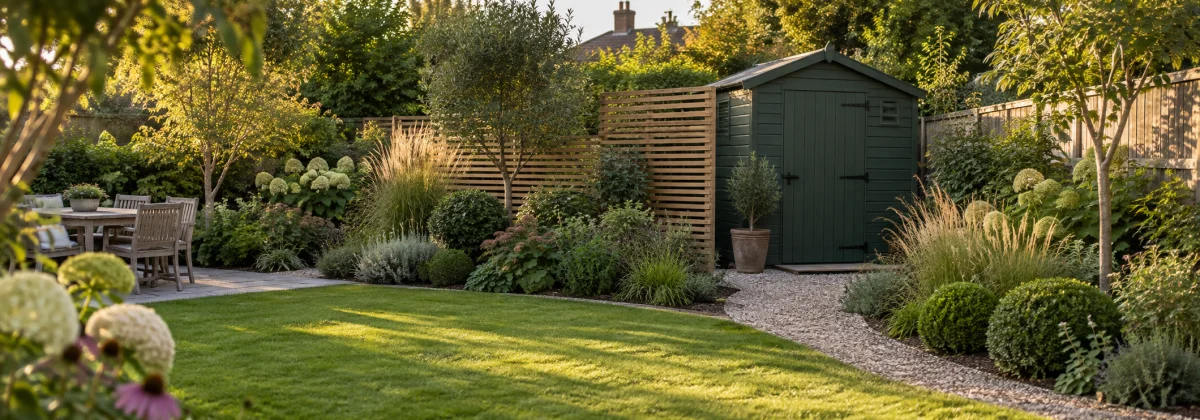
The best-disguised shed is not buried beneath ivy. It is still a clearly functioning building—dry at the base, ventilated at the eaves, reachable with a paintbrush and obvious to anyone using the door—but it no longer shouts across the garden. Its colour sits back, its hard rectangle is broken by independent screens and planting, and the path makes it feel placed rather than abandoned at the fence.
That distinction matters. Hiding a shed completely tends to create the conditions that destroy it: wet foliage on timber, leaves in gutters, no air behind walls and no way to find a leak. Integration keeps the visual benefits while preserving the building. Work from the shed outward in this order: repair, paint, screen, plant, then add detail.
Replace failed felt, clear the base, repair rot and apply preservative first. Screening should never be a decorative lid over a maintenance problem. Use the annual maintenance checklist as the starting inspection.
Start With Paint: The Biggest Change per Pound
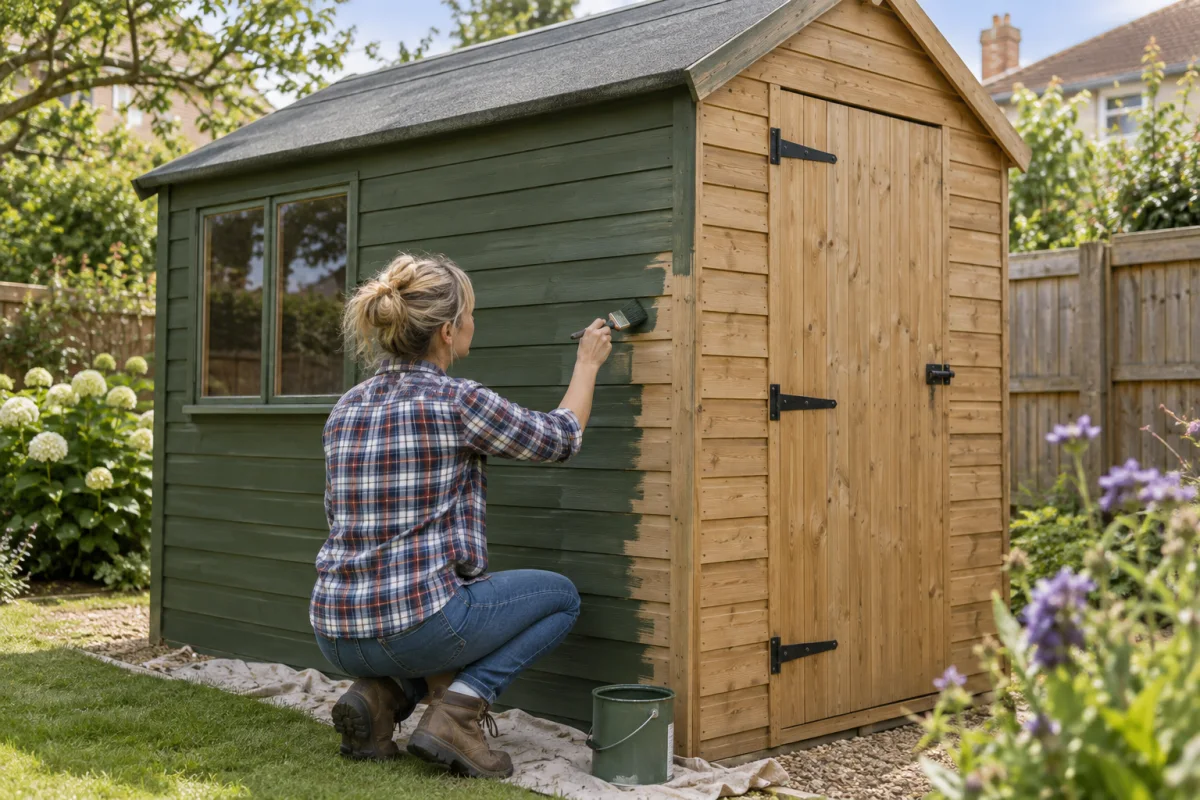
New treated timber is warm orange or honey-coloured—the exact family that jumps forward against green planting. Dark, muted paint reverses the effect. Deep olive, moss, brown-black, charcoal-green and smoke blue sit behind foliage because they have lower brightness and less colour contrast.
Choose from the view you care about. Hold painted sample boards vertically beside the shed and look from the kitchen, patio and far end of the lawn at morning and evening. A colour that disappears into a yew hedge may look blue beside a weathered fence. Do not match the lawn: grass is a bright moving foreground. Match the steady background—evergreens, fence, brick or shade.
Use one colour, or a very quiet pair
Contrasting white fascias, bright doors and black-and-white window trim describe the shed's outline. If the aim is recession, paint the walls, door, corner strips and frames one colour. Keep necessary hardware dark and simple. A second colour works when it repeats something permanent, such as the fence or house brick, but large contrast panels make the building more visible.
Prepare rather than paint around trouble
- Wash off dirt and algae; let the timber dry properly.
- Scrape loose coating and sand sharp failures, following the product's safety guidance.
- Repair splits, loose boards and exposed end grain. Treat decay rather than filling over it.
- Mask glazing and remove or loosen hardware where practical.
- Use an exterior coating compatible with the existing treatment, working it into board ends and joints without sealing intended vents.
- Apply the specified coats and drying times. Thin heroic coverage is not a finish.
Pressure-treated wood still needs a suitable decorative coating if colour is the plan, and new timber may need to weather before certain paints adhere. The timber treatment guide separates preservative, stain and opaque paint.
Freestanding Screens Break Up a Blank Wall
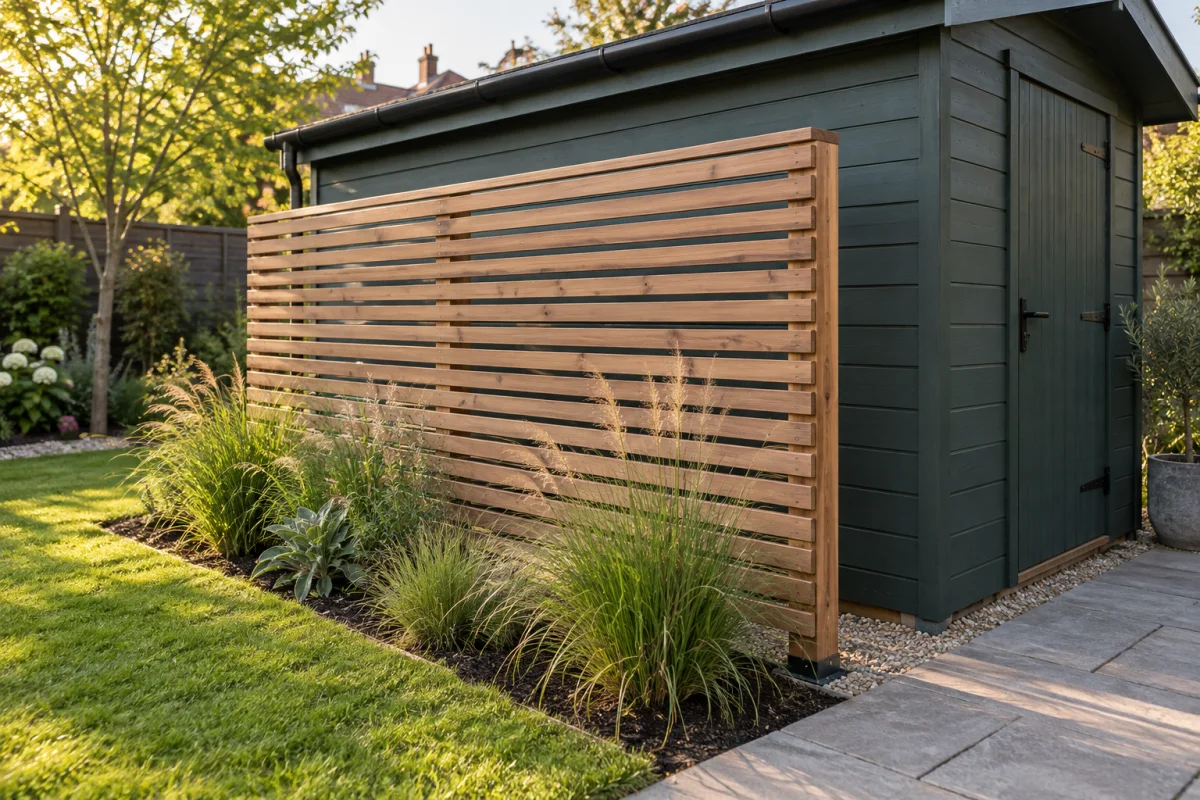
A screen is most useful where one broad side faces a patio or house. It need not hide the whole wall. Covering two-thirds of the width and stopping below the eaves breaks the shed's rectangular silhouette while leaving roof, gutters and corners accessible.
Build the screen as a separate garden structure:
- Independent posts in suitable post shoes or foundations, never fixed only through shed cladding.
- A real air gap behind it—enough to reach the wall and to stop leaves bridging the space.
- An open bottom so rain splash and debris do not collect against the base rail.
- Slats with gaps to pass wind. A completely solid panel takes more wind load and may simply move the problem to its posts.
- Top below the gutter so roof drainage and maintenance remain visible.
Horizontal slats widen a narrow garden visually; vertical battens echo grasses and small trees. Rough woven hazel feels informal but has a shorter life. Powder-coated metal mesh almost disappears beneath climbers and suits a tight gap. Whatever the material, check whether a new screen is legally a fence or means of enclosure in its position—especially beside a highway or where local restrictions apply. The screen does not inherit a special exemption because a shed stands behind it.
Leave the door side open unless the screen deliberately forms a small arrival courtyard. A shed that requires a sideways squeeze past wet foliage will be annoying every week and neglected every year.
Use Trellis and Climbers—But Keep Them off the Shed
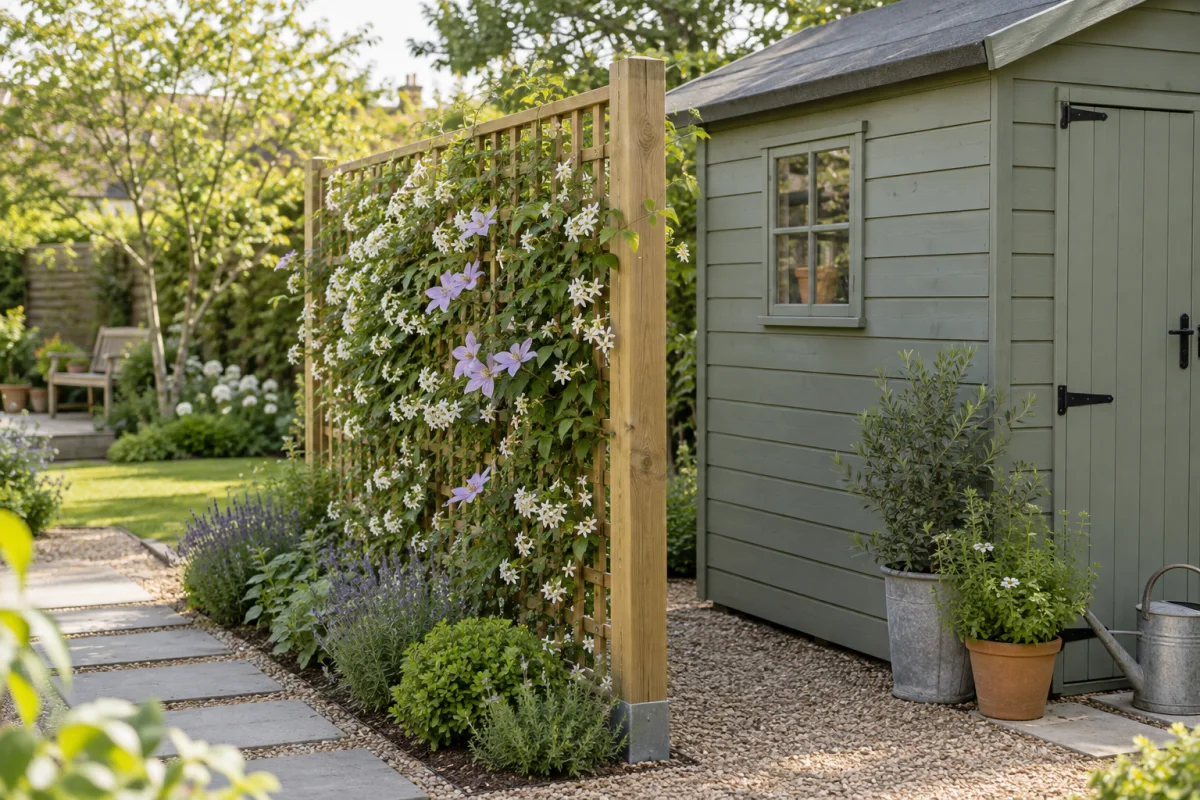
Climbers are excellent visual camouflage because they blur edges at eye level without using much ground. The support is the important part. A freestanding trellis lets timber cladding dry, allows seasonal movement and can be unbolted or pruned clear when the shed needs treatment.
Avoid self-clinging plants directly on the building. Ivy and Virginia creeper enter joints, lift felt edges, fill gutters and conceal decay. Even a polite climber becomes heavy when wet and woody. Wires screwed through thin boards create water paths and rely on cladding that was never intended to carry wind-loaded vegetation.
Choose plants by mature behaviour
- Star jasmine is evergreen in sheltered areas, neat and fragrant, but appreciates a warm position and support.
- Clematis offers a huge range of sizes and seasons. Choose a cultivar for the available height, not the largest flower in the nursery photo.
- Climbing roses suit a strong open frame but need tying, pruning and room for thorny stems away from the door.
- Annual climbers such as sweet peas give fast summer softness with no permanent woody weight.
- Espalier fruit can make a beautiful screen in sun, but needs disciplined pruning and a structure capable of carrying mature branches.
Plant roots outside the shed base zone. Water the plant, not the wall, and direct irrigation away from timber. A removable pot or trough is useful where foundations, services or future access make in-ground planting awkward.
Layered Planting Makes the Shed a Background
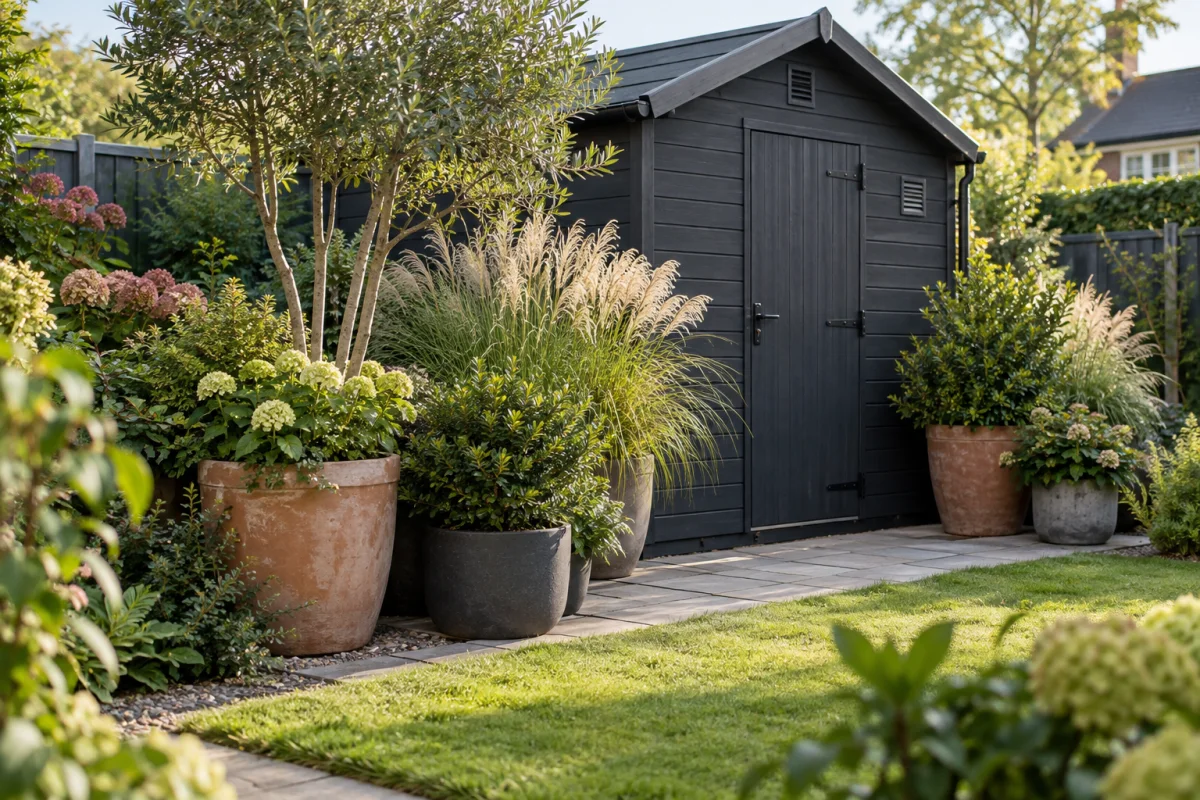
A single hedge hides by becoming a second wall. Layered planting works better: it interrupts the straight base, covers part of a corner, carries the eye upward and still leaves pockets of air. Think in three heights.
- Low layer: evergreen groundcover, ferns, heuchera, low grasses or herbs soften the base and path edge without trapping the bottom boards.
- Middle layer: rounded evergreen shrubs, hydrangeas or medium grasses cover the largest area. Space them for mature width.
- Upper layer: one multi-stem shrub or small tree breaks the roofline. Keep its mature canopy and roots appropriate to the site.
Repeat plants already used elsewhere so the shed border feels connected rather than like a screen planted in panic. Two or three species repeated in odd-numbered groups usually look calmer than one of everything. Evergreens provide winter structure; deciduous shrubs and grasses change the view without making the shed vanish into a dark thicket.
Containers are underrated. Large frost-proof pots can screen a corner immediately, move for maintenance and keep roots away from the base. Use stable broad pots, not tall narrow ones that can topple into glazing. Raise them slightly for drainage and do not let saucers overflow against the wall.
Keep the maintenance envelope
Allow roughly 300mm between low planting and timber, more where growth is vigorous. Preserve 450 to 600mm where a person must pass with a brush, clear a gutter or inspect a boundary. These are practical working allowances, not statutory distances. Prune to the planned gap rather than waiting until branches polish the paint in every wind.
Soften the Roof—the Part Seen From Upstairs
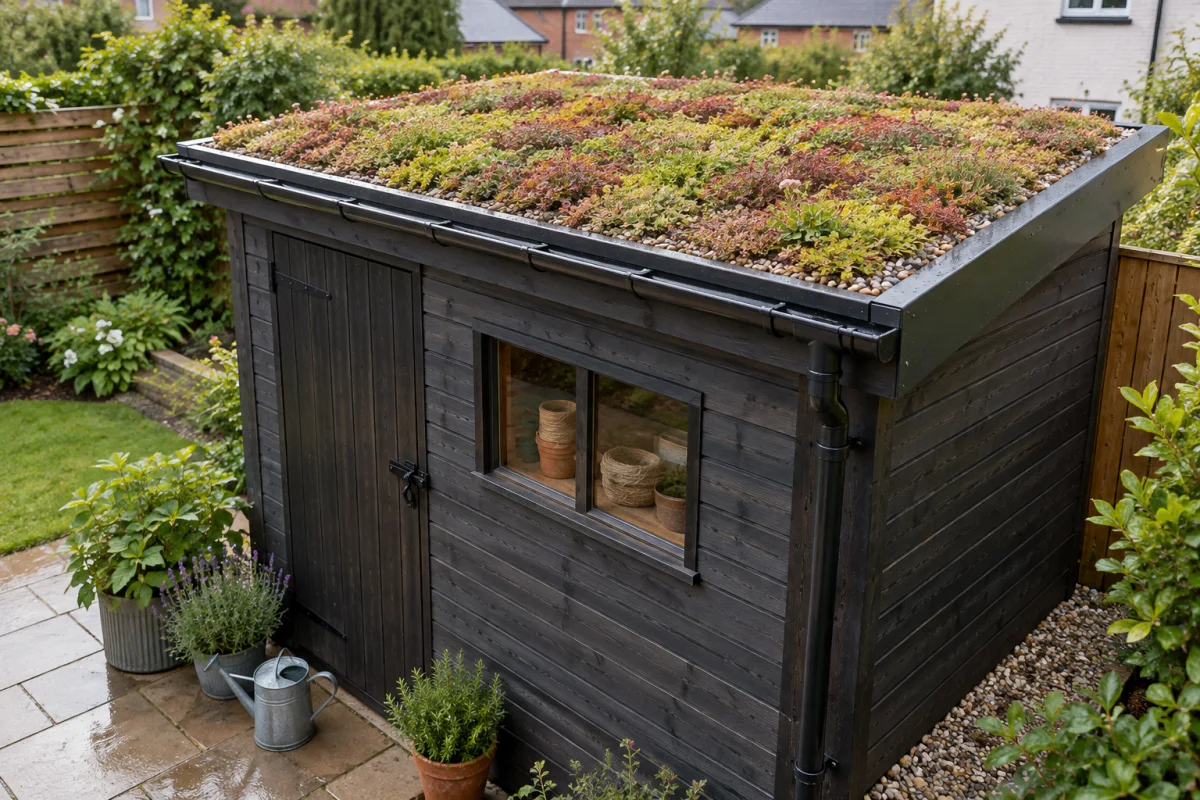
From an upstairs window, the roof is the shed. A fresh dark membrane, neat shingles or a green roof can transform that view, but the technical order remains waterproofing first, appearance second.
A sedum roof adds living colour and holds some rainfall, yet its saturated weight is the design case. Standard budget sheds often have light rafters and thin sheet decks that were sized only for felt and normal weather loads. A proper build-up includes a suitable deck, root-resistant waterproof layer, protection fleece, drainage layer, growing medium, edge restraint and a clear outlet. Pitch, wind exposure and fire performance also matter. Ask a structural professional or use a purpose-designed system with declared saturated weight.
Lighter visual alternatives include a dark mineral felt, EPDM with crisp trims or bitumen shingles in a muted tone. Do not paint old felt, lay artificial turf over it or hide failing edges beneath planters. The shed waterproofing guide explains why roof edges and runoff deserve to stay visible.
Make the Door, Path and Small Details Belong
A shed reads as a separate object when the garden stops at its threshold. Connect it deliberately:
- Continue an existing path material to the door, with a firm, non-slip landing that drains away.
- Use the same timber tone for screen, raised-bed edging or bench, rather than introducing a fourth wood colour.
- Paint shiny galvanised furniture with a compatible exterior metal coating, or replace it with robust dark hardware.
- Place one purposeful object—a water butt, potting shelf or neat log rack—rather than a scatter of decorative signs.
- Use warm, shielded low-level lighting on the path or planting, not a bright façade spotlight that announces the shed all evening.
Windows can be visually softened with internal blinds, tidy shelving or obscured film where security allows; avoid external shutters that trap water unless they are built and detailed properly. If the door is the view, treat it as the composition's calm focal point rather than trying to make it disappear behind a shrub.
Do Not Camouflage the Problems You Need to See
Dense screening gives privacy to thieves as well as to the garden. Keep a sightline from the house or a well-used path to the door and lock. Avoid placing a climbable trellis beside a low roof or window. Prune thorny planting so it deters access without preventing you reaching hinges or creating a hidden pocket. For actual protection, use the layers in the shed security guide.
Ventilation is equally easy to lose. Do not cover high and low vents with foliage, seal eaves with decorative boards or block the underfloor air gap with mulch. The ventilation guide shows why two open grilles on the same sheltered wall may do very little.
Gutters, roof edges, corners and the first 150mm of wall above the base are inspection zones. If the disguise prevents you seeing them, redesign it. Good garden integration should make annual maintenance easier: clear gravel underfoot, removable pots, a screen panel that lifts out and plants that accept pruning.
Three Practical Disguise Plans
| Plan | What to do | Best for |
|---|---|---|
| One-weekend reset | Repair and clean, paint shed and trims one dark colour, add two large moveable planters and continue the path to the door. | Rented gardens, tight budgets and sheds that still need frequent access. |
| Screened side wall | Install an independent slatted screen across part of the visible elevation, create a narrow border in front and repeat existing garden plants. | A blank shed side facing the patio or kitchen. |
| Garden-room composition | Paint, add a separate climber frame, layer planting at three heights, improve the path and—after structural design—consider a lightweight green roof. | A permanent shed that dominates views from both garden and upper floors. |
Whichever plan you choose, draw the mature outline rather than the day-one plants. Mark the maintenance gap, door swing, gutter access, water-butt lid and the route for bringing a mower or bicycle out. A design that only works while everything is young is a maintenance problem with a two-year delay.
Seven Ways People Accidentally Shorten a Shed's Life
- Growing ivy directly on timber, then discovering rot only when boards fail.
- Building a solid screen tight to the wall, trapping wet leaves and still air.
- Piling soil or mulch against the base, bridging the dry gap beneath cladding.
- Planting for nursery size rather than mature width, so access vanishes.
- Hiding the gutter outlet until overflow soaks the same corner for a winter.
- Loading an ordinary roof with soil and trays without checking saturated weight.
- Obscuring every view of the door, making the shed more private for a burglar.
The rule underneath all seven is simple: disguise the shape, not the evidence. You should still be able to see, reach and maintain every part that keeps the shed dry and secure.
Frequently Asked Questions
What colour makes a shed less noticeable?
A dark, low-saturation colour usually recedes best: deep olive, moss, charcoal-green, brown-black or a muted tone already present in the fence and evergreen planting. Match the garden background rather than the lawn, and paint trims and door the same colour to reduce contrast.
Can I grow ivy directly on a wooden shed?
It is unwise. Ivy roots and stems enter joints, hold wet debris against cladding, hide decay and make treatment impossible. Grow a manageable climber on a freestanding trellis with an inspection gap instead.
How close can plants be to a shed?
Keep enough space to inspect, treat and ventilate the wall. As a practical target, leave around 300mm for low planting and 450 to 600mm where you need to walk, paint or clear gutters. Mature size matters more than the pot label at planting time.
Can I put a screen directly against a shed?
No. Make the screen independent, allow air to pass beneath and behind it, and leave access for maintenance. Fixing battens through cladding creates water paths and can prevent boards moving naturally.
Can any shed have a green roof?
No. Even a lightweight sedum system adds substantial saturated weight, and the shed roof needs suitable joists, deck, pitch, waterproof membrane, edge restraint and drainage. Obtain a structural check or use a purpose-designed system rather than adding trays to an ordinary thin roof.
Will disguising a shed make it less secure?
It can. Dense planting may hide doors and windows from the house and give a thief cover. Keep the approach and lock visible, avoid climbable screens beside the roof, maintain lighting and preserve clear sightlines to vulnerable openings.
Design a shed that belongs in the garden
Choose proportions and a roof form that fit the site before paint and planting do the finishing work.
Design your shed →